

Contents
- Returning to the Mountains After a Long Break
- Choosing a Winter Trek in the Himalaya
- Dehradun: The City That Taught Me to Love the Mountains
- How Kedarkantha Replaced Har Ki Dun?
- Kedarkantha Trek Overview (Quick Guide)
- Journey from Dehradun to Sankri: First Sign of Kedarkantha’s Popularity
- Sankri Village
- Kedarkantha Trek Briefing
- Day 1: Trek Begins Amid Heavy Snowfall
- Day 2: Clear Skies and Base Camp Trek
- Day 3, Summit Day: The Final Push
- Descent to Sankri
- Chaos at Sankri
- Mobile Network at Kedarkantha Trek
- What Kedarkantha Trek Taught Me?
- Final Thoughts on Kedarkantha Trek
1. Returning to the Himalaya After a Long Break
When I was living in Delhi, going on a Himalayan trek every year was almost a routine for me. After I moved to Guwahati, this slowly changed. Although Arunachal Pradesh and Sikkim were close by, the North-East India offered so many places to visit that I spent most of my holidays on random road trips across all seven states instead of trekking. Even so, my connection with the mountains never faded. The last major Himalayan trek I completed was the Goecha La trek in Sikkim in 2018. Since then, my trekking has been limited to shorter and less challenging trails in Northeast India.
In North-East India, I explored beautiful places like Dzükou Valley in Nagaland, the Double Decker Living Root Bridge in Meghalaya, and Shirui Peak in Manipur. These treks were scenic and rich in local culture, but they did not have the altitude, scale, or raw challenges that Himalayan trek offer. The hills of the North-East are beautiful, but they do not give the same feeling as snow-covered Himalayan mountains rising above the clouds. Arunachal Pradesh does have some more challenging treks, but at that time they were not very popular, and there was limited information and access.
Read about Dzükou Valley in the North East India: Trekking to the Dzukou Valley
In the summer of 2024, I shifted to Prayagraj, and for the first time in many years, the Himalayas no longer felt far away. Being closer to the mountains renewed my desire to start trekking again. However, after 5–6 years without serious trekking, my body felt stiff and my confidence was low. I kept wondering if I could still manage steep climbs, cold nights, and long walking days. Since I was not very physically active, I often doubted my strength and stamina for a Himalayan trek. So, instead of choosing a difficult trek, I decided to start slowly with a short and relatively easy trail.
2. Choosing a Winter Trek in the Himalaya
In general, the best time to trek in Uttarakhand and Himachal Pradesh is from mid-September to mid-November. During this time, the alpine meadows are lush and green, and most trekking trails are in good condition. In winter, from December to February, many high-altitude treks are closed because of heavy snowfall and unsafe weather.
Earlier, people usually did winter treks like Nag Tibba and Chopta, or at most the Frozen River trek in Ladakh. Later, adventure lovers discovered other safe and exciting winter treks such as Kedarkantha and Kuari Pass, where they could enjoy the beautiful snow-covered Himalayas. Our own winter trek in Hemis National Park near Leh introduced us to the magic of winter trekking, with frozen rivers, clear blue skies, and snow-covered trails.
Because of family responsibilities, it became hard for me to trek between September and November. The only time available was during school winter holidays, usually in the last week of December. This left me with very limited trekking options.
Har Ki Dun: The Original Plan
For many years, I wanted to do the Har Ki Dun trek. It is one of the most beautiful and beginner-friendly treks in Uttarakhand. The trail starts from Sankri village, goes through traditional Garhwali villages, and opens into a wide alpine valley surrounded by snow-covered mountains. It is an evergreen trek that can be done in most seasons and is considered easy. Since it can be done solo, without a trekking agency, it became the perfect choice for me to restart trekking in the Himalayas. With this obvious choice in my mind, I boarded a train to Dehradun.
3. Dehradun: The City That Taught Me to Love the Mountains
Being back in Dehradun feels like meeting a part of myself again. It is the city of my dreams, my memories, and my struggles. In 2008, I spent eight months here and fell completely in love with the city. I remember sitting for hours at MDDA Park near Rajpur Road, just lost in the beauty of the hills. Looking at those mountains between Dehradun and Mussoorie is what first stirred a deep passion for trekking in my heart.
While most people took the bus to Mussoorie, we preferred to hike up from Rajpur Road. It took us about four or five hours to reach Mussoorie on foot. Once we arrived, we’d spend our evenings eating ice cream on Mall Road, watching the mist crawl in. Then, we’d figure out a way to get a ride back down to Dehradun before it got too late.
Mussoorie feels too crowded now, but it used to have plenty of quiet spots where you could just breathe. Even though Kempty Falls was always popular, it feels different today. Back then, We were not chasing summits or Instagram photos. There was no pressure to achieve anything. The mountains belonged to us, and we belonged to them.
Dehradun was the city that made me fall in love with mountains. That love later took me across Jammu & Kashmir, Himachal Pradesh, and Uttarakhand.
4. How Kedarkantha Replaced Har Ki Dun?
I planned to stay in Dehradun for a couple of days before heading to Sankri. While searching online for information about the Har Ki Dun trek, my social media feeds started filling up with ads for the Kedarkantha trek. Over the past few years, Kedarkantha has become one of the most popular winter treks in India.
Since both treks start from Sankri, the rising popularity of Kedarkantha has led to a sharp drop in demand for the Har Ki Dun trek. Compared to Har Ki Dun, the Kedarkantha summit feels more accessible, more thrilling, better suited for trekkers, and offers a higher chance of experiencing snowfall.
I found several trekking companies offering affordable Kedarkantha packages. With little effort, I discovered a group leaving the very next day. I immediately made up my mind and booked a Kedarkantha trek package.
5. Kedarkantha Trek Overview
- 📍 Location: Uttarkashi district, Uttarakhand
- 🏕️ Base Village: Sankri
- ⛰️ Altitude: ~12,500 ft (3,800 m)
- 🗓️ Duration: 3 Nights / 4 Days
- 🚶 Difficulty: Easy to Moderate
- ❄️ Ideal For: Beginners, winter trekking, snow lovers
- 🎒 Solo Travel: Possible independently, but logistics can become expensive. Joining a group is recommended.
- 💰 Booking Tip: Packages are often cheaper if booked a day before departure from Dehradun. Booking directly from Sankri can be more difficult.
6. Journey from Dehradun to Sankri: First Sign of Kedarkantha’s Popularity
As per the itinerary of our Kedarkantha trek package, our journey was scheduled to commence from Dehradun at 6:00 AM. The package itself was quite comprehensive, covering:
What’s Included
Comfortable travel from Dehradun to Sankri, the base village for the trek.
A professionally guided Kedarkantha trekking experience.
Travel back to Dehradun after completing the trek.
I arrived at Prince Chowk, near the Dehradun Railway Station, around 05:30 AM. Despite the hour being well before sunrise, the area was already teeming with activity. There was a palpable buzz in the air. Groups of young men and women, backpacks slung over their shoulders, gathered in clusters, exchanging excited chatter and last-minute preparations. Nearby, about ten to twelve tempo travelers and four or five buses stood ready, engines idling, as if eager to carry us toward the snowy trails that awaited.
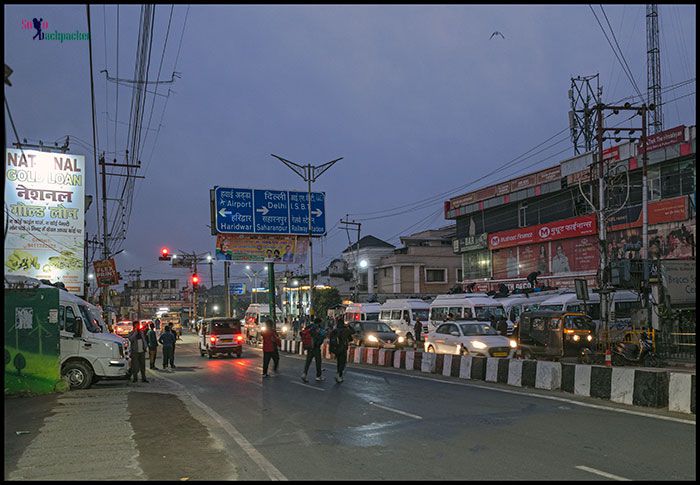
Every single vehicle lined up there was bound for Sankri village, and almost the entire crowd was heading toward Kedarkantha. Seeing this, I realized for the first time the immense popularity of this trek—how it drew adventurers from far and wide, all converging for the same Himalayan journey.
Meeting Fellow Trekkers: How a Group Was Born?
Although I usually prefer trekking alone, I have always enjoyed chatting with fellow travelers along the way. At the bus stand, a young guy named Raj struck up a conversation with me, and the connection was instant. Our easy rapport quickly drew in others around us, and before long, we had unknowingly pulled the entire group together. What had started as a quiet, individual journey was slowly transforming into a lively, shared adventure.
By the time we crossed Mussoorie, the bus was buzzing with energy. People who had been strangers were now swapping stories of past treks, travel mishaps, and personal adventures. Laughter flowed freely, and snacks—biscuits, chips, and laddoos—passed from hand to hand. The barriers between us disappeared as everyone naturally found a place in this impromptu group. The energy was infectious, and a strong sense of camaraderie was forming, as if we were all pieces of a puzzle finally coming together.
We stopped at a small roadside dhaba for breakfast, everyone crowding around, talking and teasing, sharing the food in a spirit of playful generosity. Later, when the bus paused near a river, cameras came out, and people jostled to get the best shots. Even the overcast sky couldn’t dampen our spirits; in fact, it added to the anticipation, and everyone quietly hoped for snowfall.
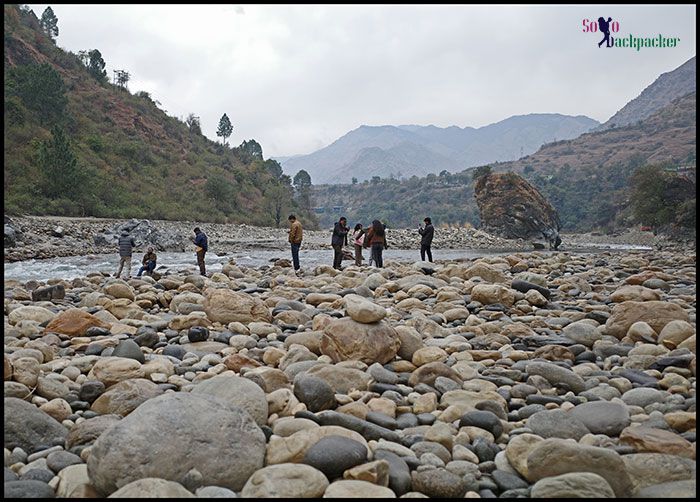
When we finally entered the Govind Pashu Vihar National Park and Sanctuary, that wish was granted. Snowflakes began drifting from the sky, delicate and cold, and the driver stopped the vehicle so we could step out and experience the magic. Except for two or three seasoned travelers, this was the first snowfall for everyone else. The excitement was pure, childlike, and contagious. People threw handfuls of snow into the air, made footprints, and laughed until their faces hurt. By the time we got back on the bus, the group was no longer a collection of strangers but a team, connected by laughter, shared awe, and the simple joy of being in the mountains together.
7. Sankri Village
Sankri is a small village located inside a wildlife sanctuary in Uttarakhand at the height of 1950 m (6400 ft). It is a well-known starting point for many popular trekking routes in the region. Earlier, Sankri was a quiet and peaceful village, but over the years it has changed a lot. Today, it is lined with many new guesthouses and homestays, and the village stays lively with trekkers coming and going throughout the year.
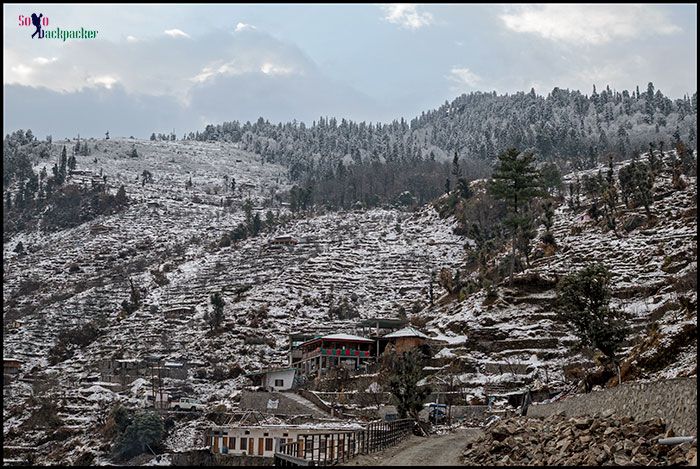
The small market area is full of trekking-related shops selling gear, supplies, and essentials for travelers. From the village, one can enjoy beautiful panoramic views of the surrounding hills and deep valleys, which add to its charm.
By the time we arrived in Sankri, it was completely dark. We checked into our guesthouse, freshened up, and rested for a while after the long journey.
8. Kedarkantha Trek Briefing
After dinner, we were called for a trek briefing. The briefing was conducted by the trek leader, who explained everything in detail. He talked about the trekking route, the campsites where we would stay, safety rules to be followed during the trek, expected weather conditions, and the do’s and don’ts on the trail. He patiently answered all questions and cleared the doubts and fears of the group members, especially those who were trekking for the first time.
The trek plan was shared as follows:
- Day 1: Trek from Sankri to Juda Ka Talab, 4 km
- Day 2: Juda Ka Talab to Kedarkantha Base Camp, 3 km
- Day 3: Early morning summit climb and descent to Hargaon, 6 km
- Day 4: Trek back to Sankri, 6 km
Many people in the group did not have proper trekking gear. Fortunately, most items were available on rent at the guest house. Usually, trekking packages include only basic equipment like a trekking pole and crampons. For other essential items such as backpacks, trekking shoes, gloves, jackets, and warm clothing, people had to rent them separately. However, the rental prices were quite high.
9. Day 1: Trek Begins Amid Heavy Snowfall
During the night, there was heavy snowfall. When we woke up in the morning, everything around us was covered in fresh snow, as if a white carpet had been laid across the village. It was a beautiful and peaceful sight. Before starting our trek, we took a short walk around the guest house and enjoyed the snowy surroundings.
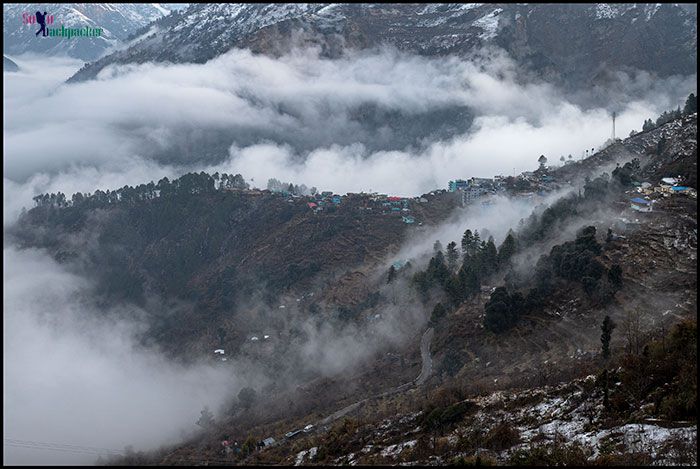
The main trekking trail was about one kilometer away from our guest house. The initial part of the trail passed through village fields, where we saw many apple orchards. Along the early part of the trail, there were small temporary tea stalls and snack shops selling hot tea, snacks, and Maggi, which gave us short and welcome breaks. About an hour into the trek, it started snowing again. For most of us, this was our first experience of trekking during heavy snowfall, and it felt both exciting and magical.
If you are interested in visiting Kedarnath Temple: A Wonderful Trip To Kedarnath Temple
The rocky trail slowly transformed into a white corridor surrounded by pine, deodar, and oak forests. Snow covered the branches, moss, and tree roots, turning the forest into a quiet winter wonderland.
During winter, many animals move to lower altitudes, so the forest felt unusually silent. The only sound we could hear was the crunch of our boots on the snow. This deep silence was calming and soothing, making it even more enjoyable to experience the snow-covered forest in the company of fellow trekkers.
Juda Ka Talab: First Campsite, 2773 m (9100 ft)
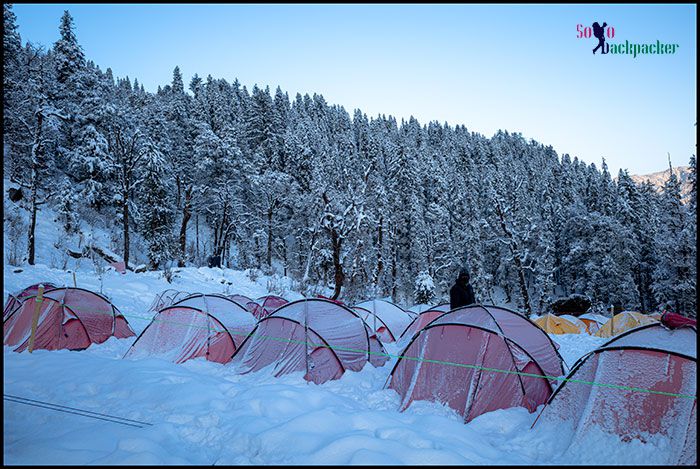
By afternoon, we reached our first campsite near Juda Ka Talab, which is approx 4 km from Sankri. The actual talab (pond) was still higher up the trail, but the campsite was located in a wide forest clearing. It was a good spot surrounded by tall trees. The tents were already set up when we arrived, but they were completely covered under a thick layer of snow.
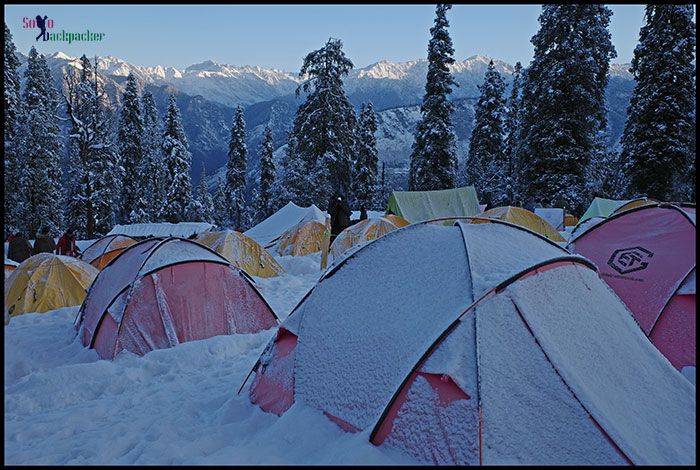
As we were settling down and arranging our things, heavy snowfall started again. The snowfall was so intense that we had to quickly move inside our tents for shelter. After about an hour, the snow finally stopped. When we came out of our tents, the sun appeared for a short while. The fresh snow sparkled under the sunlight, and the entire landscape looked magical. Everyone stepped out to enjoy the view, clicked photos, and played with the snow until it started getting dark.
Later in the evening, heavy snowfall began once again. While we were having dinner inside the dining tent, the guide informed us that if the snowfall continued at this pace, it might not be safe to move ahead on the trek. Excessive snow could hide the trail completely and create blind spots, increasing the risk of losing the route or slipping. This news made us a bit anxious, but we hoped the weather would improve by the next day.
10. Day 2: Clear Skies and Base Camp Trek
The next morning, we woke up to bright sunshine. The clear weather brought a big sense of relief to everyone at the campsite. After the heavy snow of the previous day, the sunshine lifted our spirits and filled the camp with fresh energy.
With renewed excitement and confidence, we began our trek toward Kedarkantha Base Camp, which is located at a height of 11,250 feet, about 4 km away. The trail was quite busy and filled with trekkers from different trekking agencies. Most of them were young professionals from cities like Delhi NCR and Bengaluru, who had come to the mountains to make the most of their year-end holidays. During late December, Kedarkantha becomes one of the most popular winter treks in India. Every day, hundreds of trekkers attempt the summit, turning the otherwise quiet mountain trails into a place filled with constant chatter.
Even though there were many people on the trail, the hike was still enjoyable. The walk was pleasant and passed through beautiful forests filled with pine, oak, and deodar trees. The fresh snow and tall trees made the surroundings calm and refreshing. We first reached Juda Ka Talab, which was completely covered with snow. At first glance, it looked like an open snowfield. Only a small frozen patch of water gave a hint that it was actually a pond hidden beneath the snow.
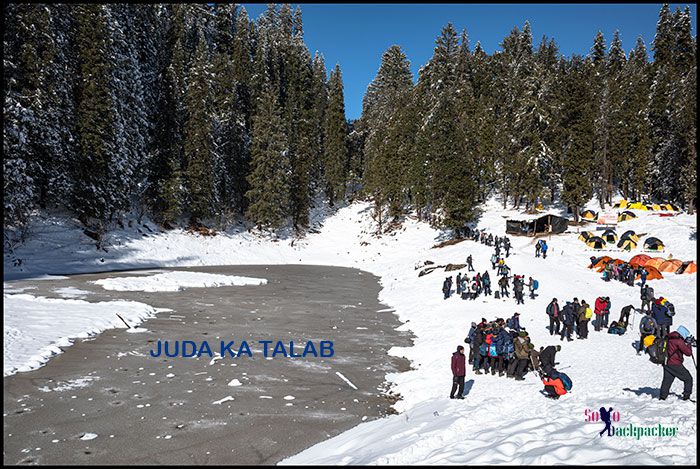
After crossing Juda Ka Talab, the trail continued through the forest once again. This part was also crowded, but the natural beauty made the walk enjoyable. There is a spot along the trail where mobile network is available, and many trekkers stopped there to make calls or send messages.
By late afternoon, we finally reached the Kedarkantha Base Camp. We checked into our tents, settled down, and rested after the long but rewarding day of trekking.
11. Day 3, Summit Day: The Final Push
We were supposed to begin the final climb to the summit at around 3:00 AM so that we could reach the top in time to watch the sunrise over the Himalayan peaks. Since the trail was covered with thick snow, we were given crampons to fix onto our shoes. These helped us get a better grip and made walking on the slippery snow safer.
Despite the early hour and the challenging conditions, everyone in the group felt confident and motivated. There was no fear or hesitation, only excitement and determination to reach the summit. Due to some delay, we finally started the ascent at around 4:00 AM.
The climb was steep and physically demanding. We moved slowly and carefully, step by step, in complete darkness. The cold air, heavy breathing, and the steady crunch of snow under our feet made the effort feel intense. However, the trail was beautifully lit by hundreds of tiny lights from headlamps and mobile phones of trekkers climbing ahead and behind us. This long line of moving lights made the tough climb feel encouraging and rewarding, reminding us that we were all sharing the same goal.
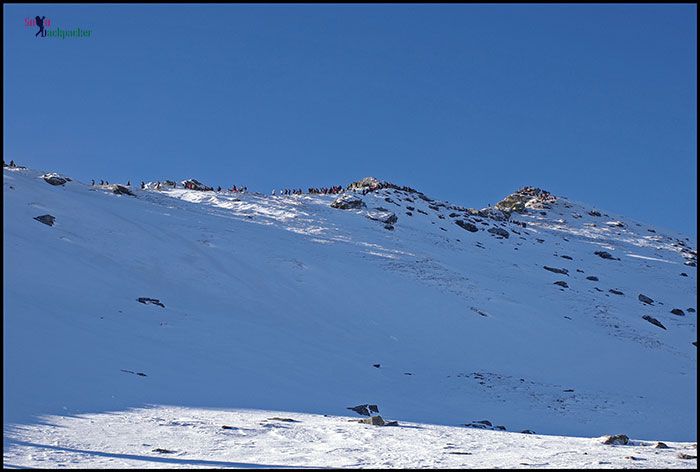
We trekked for nearly 3 kilometers to reach the summit, which stands at an altitude of about 12,500 feet and arrived well before sunrise. For many of us, this climb was a real test of physical strength and endurance. The steep ascent, slippery trail and extreme cold pushed everyone to their limits.
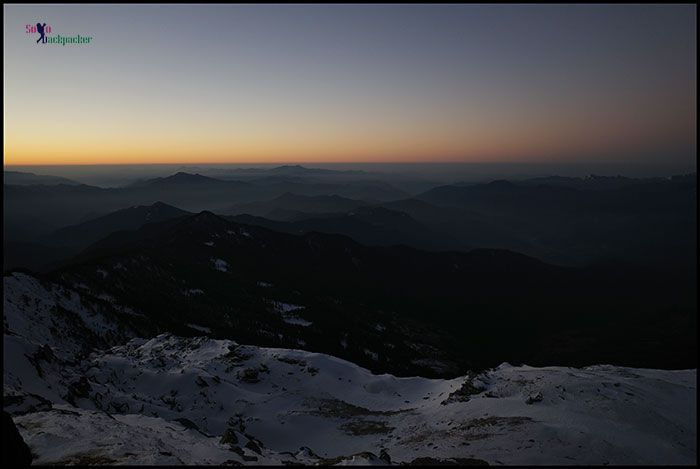
At the summit, we were greeted by strong wind. The cold was so intense that I could not even remove my gloves to take photos. Standing there felt tough, but it was also unforgettable. Despite the harsh weather, reaching the summit gave me a deep sense of achievement. All the effort, fatigue, and discomfort felt worth it. The view from the top was breathtaking and truly rewarding. As far as the eye could see, the mighty Himalayan ranges stretched across the horizon, with beautiful valleys lying far below.
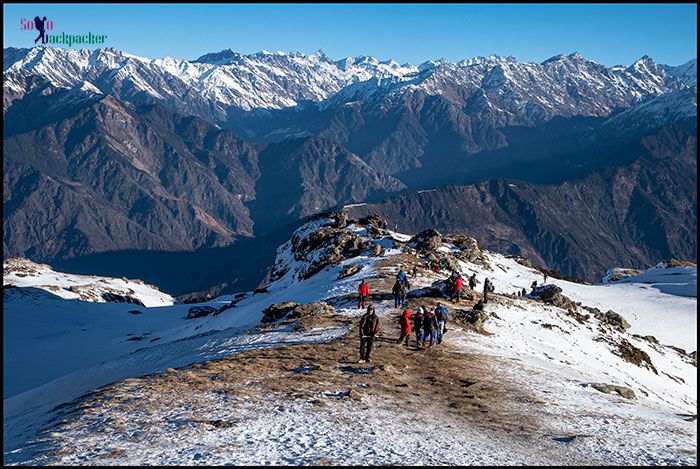
Slowly, the sun rose in the distance, and the mountains began to glow in soft golden colors. It was a magical moment that stayed with us for a long time. After clicking a few pictures and spending some quiet moments at the top, we began our descent back toward the base camp.
12. Descent to Sankri
The descent back to the base camp was smooth and without any major problems. Once we reached the base camp, we had our lunch and returned the crampons. Until that point, walking was manageable because the crampons had protected us from slipping on the snowy surface.
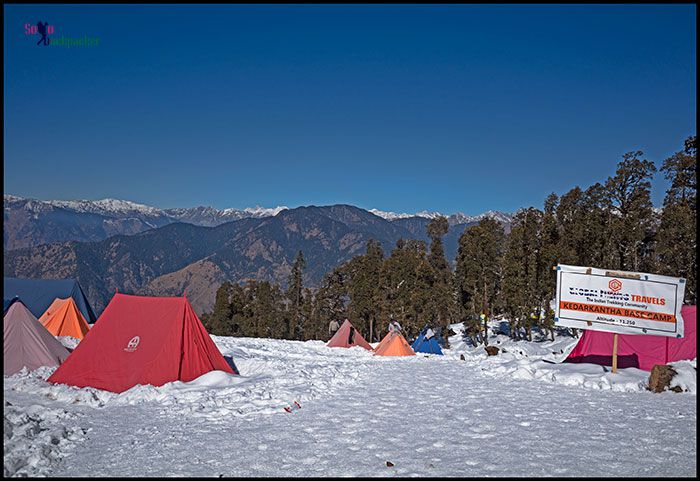
After leaving the base camp, we continued our descent toward the next campsite at Hargaon. This section of the trail was much more difficult. The path had turned into a slippery mix of melting snow and mud. Without crampons, every step had to be taken very carefully to avoid falling.
By the time we reached the Hargaon campsite, everyone was extremely tired and exhausted. The continuous walking, harsh cold, and snow had drained our energy. No one felt like staying in the tents any longer. After discussing among ourselves, we decided to continue trekking further down and return to Sankri instead of halting there.
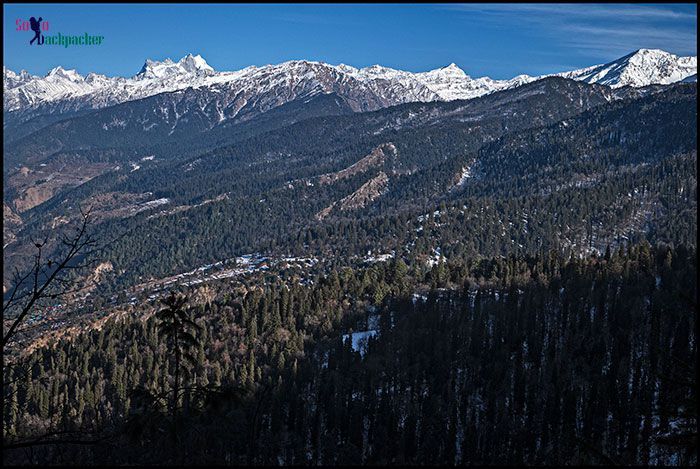
When the snow patches started to disappear and the trail turned into bare rock, a new danger appeared—black ice. A thin, hard layer of ice had formed on the rocks, making the trail even more dangerous and slippery. People began slipping and falling again and again along this section.
We were still about two km away from Sankri when it started getting dark. To our utter shock, our trek guide disappeared without any communication. We continued walking on the straight sections of the trail, but soon we missed the actual route. From that point, we could see Sankri village below us, but there was no one around to show us the correct path.
A relatively easy trek offering breathtaking views of the Himalayan Peaks:Khaliya Top Trek in Munsiyari, Uttarakhand
We unknowingly moved ahead on the wrong trail and soon realized something was not right. After some time, our guide suddenly appeared and brought us back to the correct route. When we questioned him, he explained that a girl from another trekking group had suffered a serious leg injury. The team had to carry her on a stretcher all the way to Sankri. Because of this emergency, he had to leave us unattended for a short while.
It became completely dark, and Sankri was still some distance away. We could hardly see anything on the trail, and the danger of black ice was still present. People continued to slip and fall at different points along the path. Since the surface was rocky, a sudden fall could easily lead to broken bones or serious injuries.
To reduce the risk, we decided not to walk upright on the dangerous sections. Instead, we sat down and slowly slid or crawled using our hands and hips to maintain balance. It was slow, tiring, and stressful, but it felt safer than standing and walking.
Step by step, with great care and patience, we finally reached Sankri at around 8:00 PM. Reaching the village felt like a huge relief after such a tense and exhausting descent.
13. Chaos at Sankri
Another shocking news was waiting for us when we reached Sankri. Since we were originally supposed to stay at the Hargaon campsite that night, our guesthouse in Sankri had already been given to another group that was leaving the next morning. There were no rooms available for us. Our guide had not coordinated this properly, and we were left confused and helpless.
After such a long, cold, and exhausting day, the situation felt very stressful and discouraging. We stood on the roadside for almost half an hour, tired and frustrated, arguing with the staff about the poor communication and planning. To make things worse, almost all the guesthouses in Sankri were fully booked that night.
Finally, after a lot of discussion, requests, and pleading, they managed to arrange four rooms for our group of fifteen people. The rooms were offered only on the condition that we would pay for the stay that night. With no other option left, we agreed.
We moved to the guesthouse, rested at last, ending a challenging yet memorable day. The next day, as per the agreed trekking package, they arranged our transfer back to Dehradun in a tempo traveller. After breakfast, we boarded the vehicle and began our return journey. Tired but satisfied, we left Sankri with memories of a challenging, adventurous, and unforgettable Kedarkantha trek.
14. Mobile Network at Kedarkantha Trek
Mobile network connectivity is good in Sankri village. On the trekking trail up to Juda Ka Talab, the network is available only at a few places and keeps coming and going. After crossing Juda Ka Talab, there is almost no mobile network, except at one specific point on the trail. At the summit, the network is available again, but it is weak and intermittent.
15. What Kedarkantha Trek Taught Me?
This trek completely changed the way I look at trekking. I often wondered whether trekking is better done alone or in a group. The Kedarkantha trek gave me a clear answer. The group I trekked with turned out to be one of the best I have ever experienced.
In just three days, people who were complete strangers became close friends. We shared difficult moments, helped each other on tough sections, and celebrated small victories together. When it was time to part ways, we left with tired bodies but warm hearts, carrying beautiful memories and promises to travel together again in the future.
16. Final Thoughts on Kedarkantha Trek
Kedarkantha was not just another trek for me. It was a way to reconnect with the Himalayas once again. It may not be an ideal trek in many ways, as it is very crowded and highly commercialized. However, sometimes a journey is not only about reaching the summit.
For me, this trek was more about rediscovering the joy of trekking, sharing moments with others, and building friendships along the way. In that sense, Kedarkantha turned out to be the perfect trek—one that reminded me why I love the mountains and the people I meet there.
