

📍 Contents
1. Darshan at Badrinath
When we reached the sacred shrine of Badrinath Temple late in the morning, the crowd was surprisingly manageable. We did not have to wait long for the darshan of Shri Badri Vishal. Standing before the one-meter-tall Shaligram idol of Vishnu Bhagwan felt deeply surreal and magical. The spiritual energy of the temple created a moment that quietly stayed with us long after the prayers were over.
Our visit to Badrinath Temple: Divine Blessings from Shri Badri Vishal
After offering our prayers to Bhagwan Badri Narayan, we stepped out of the temple premises. There was nothing particular planned for the rest of the day. After a little rest and food, we decided to visit Mana Village, located barely 4 km from Badrinath. Mana Village is often popularly described as the first Indian village near the India–Tibet border. However, the actual Indo-Tibetan border lies nearly 51 km beyond the village, deeper in the high Himalayan mountains.
Since we had plenty of time and no urgency at all, hiring a vehicle did not even cross our minds. We simply began walking along the quiet mountain road leading towards Mana. However, we had no idea that the day would eventually lead us all the way to Vasudhara Falls beyond Mana.
2. Walking Towards Mana Village
The road from Badrinath to Mana Village was quiet, scenic, and almost empty of traffic . The condition was also good with a smooth and well-maintained surface all the way to Mana. We spent almost an hour The cold Himalayan breeze, the towering snow-clad peaks, and the slow rhythm of life in the valley made the short journey itself deeply enjoyable. The road condition was surprisingly good, with a smooth and well-maintained surface all the way to Mana.
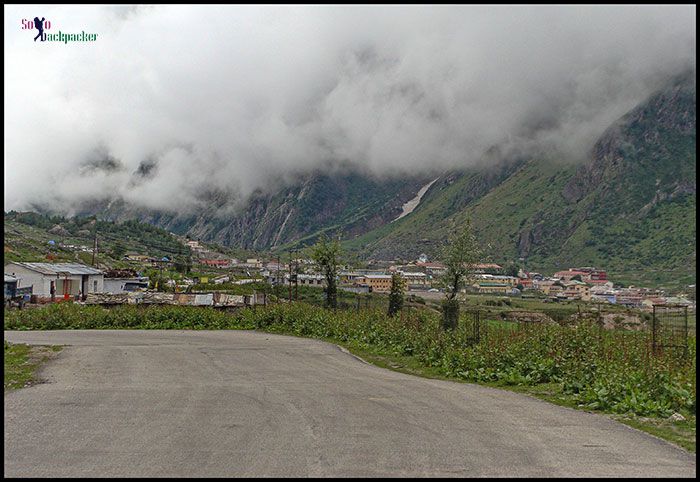
We spent almost an hour jumping around, clicking photos, and gazing endlessly at the towering peaks around us. especially wanted to capture a clear glimpse of Neelkanth Peak nearby, but the clouds kept hiding it most of the time. We could only manage a few quick views of the peak before finally reaching the entrance of Mana Village.
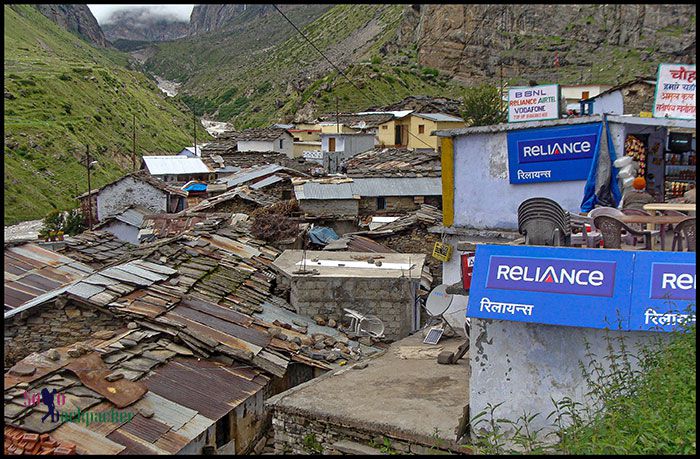
Until a few years ago, Mana was widely known as the Last Indian Village and visitors were welcomed by a big board carrying the same words. Later, under a government initiative led by the Border Roads Organisation, the village was officially declared as India’s First Village near the India–Tibet border. Today, the signboard at the entrance proudly reads: First Indian Village Mana.
The transformation was visible not just in the name, but also in the road conditions. The road from Badrinath to Mana and beyond has now been completely upgraded into a smooth two-lane highway.
3. Mana – From India’s Last Village to First Village
A narrow road enters the village while the main road climbs further uphill towards Ghastoli and eventually to Mana Pass near the actual Ind—Tibetan border. Mana Pass lies around 52 km from Badrinath.
We entered the village through a narrow road lined with stone houses and small shops. Mana is a small Himalayan village with a population of barely 500 to 600 people. In Mana, people primarily rely on two sources of livelihood: tourism and self-sustained farming. They grow vegetables for their own use
Life here is not easy. Heavy snowfall covers the region for almost six months every year. During winter, agriculture stops completely, the doors of Badrinath Temple close, and tourists disappear. The villagers then move with their families and cattle to lower regions such as Joshimath, Pandukeshwar or further down. They return only when summer arrives and the Char Dham Yatra begins again. Year after year, this cycle continues.
4. Places to See in Mana
Although Mana looks like a tiny mountain settlement, it holds deep mythological and spiritual importance.
4.1 Vyas Gufa (Cave)
It is believed that Maharishi Ved Vyas composed the Mahabharata here. According to mythology, Ved Vyas dictated the verses while Lord Ganesha wrote them down. Several Puranas and ancient scriptures are also said to have been written inside this cave.
4.2 Ganesh Gufa (Cave)
Located close to Vyas Gufa, this cave is associated with Lord Ganesha, who is believed to have written the Mahabharata here while listening to Ved Vyas.
4.3 Saraswati River
The Saraswati River remains one of the greatest mysteries in Indian mythology. It is believed to flow underground for most of its course. The mountains on the outskirts of Mana Village are considered to be the source of this sacred river. Deo Taal, near India-Tibbet border towards Mana Pass, is also considered as the origin of Sarswati River. Near Bhim Pul, the river can actually be seen in its visible form.
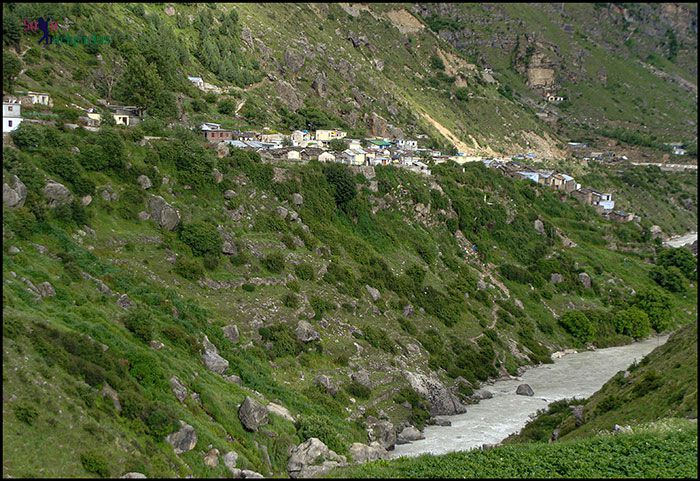
The roaring stream of the Saraswati River emerges forcefully beneath the rocks near Bhim Pul. Few meters away from the bridge, it eventually meets with the Alaknanda River near the village.
4.4 Bhim Pul
According to Hindu mythology, Yudhishthira, the other Pandavas, Draupadi, and their faithful dog were travelling towards heaven through this valley during their final journey. When they reached this spot, they found themselves blocked by the fierce flow of the Saraswati River with no way to cross it.
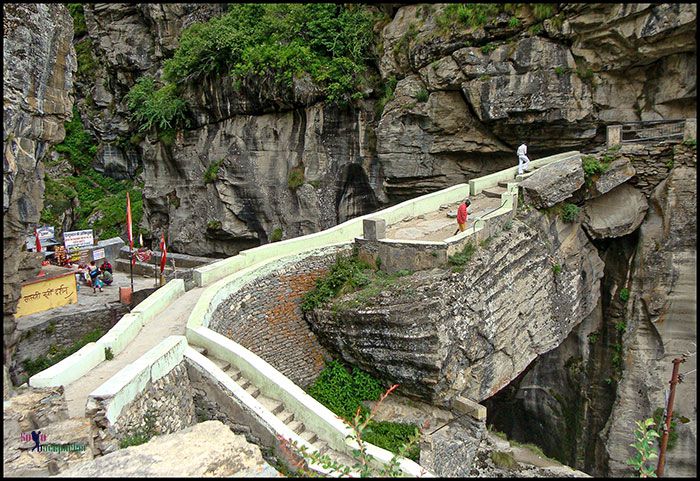
It is believed that Bhima then lifted a massive rock and placed it across the river to form a bridge. That natural stone bridge is today known as Bhim Pul. The violent roar of the Saraswati rushing beneath the huge rock makes the entire place feel even more dramatic and legendary.
Right next to Bhim Pul, there used to be a single famous little shop selling water, cold drinks, tea, and Maggi, widely known as “India’s Last Shop.” However, after Mana Village was rebranded as the “First Village,” this signboard was also changed to “India’s First Tea Shop.”
Ironically, two more shops had appeared right beside it, each proudly displaying almost the same “India’s First Shop”signboard.
5. Trekking to Vasudhara Falls
From Bhim Pul, the farm fields of Mana Village could be seen spread across the mountain slopes and Alaknanda Valley. A trekking trail continued beyond Bhim Pul into the mountains. Out of curiosity, we asked someone where the trail led. That was when we first heard about Vasudhara Falls, located nearly 5 km beyond Bhim Pul.
Like many memorable experiences that were never part of the plan, we did not think twice before deciding to walk all the way to Vasudhara Falls.
5.1 Starting of the Trek
Although the trail was paved with stones, it felt fairly comfortable in the beginning. For the first 2 km, the walk was easy and enjoyable. The whole trail was covered with mist in the valley. Gradually, the path started becoming rougher and rockier as we moved deeper into the mountains.
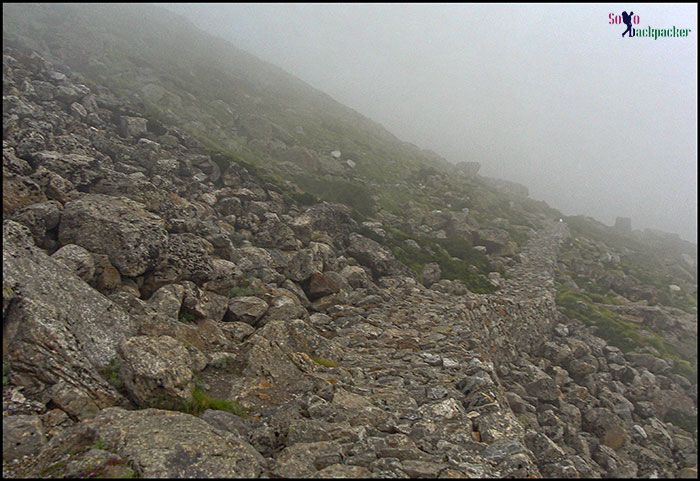
On the way, we met a Babaji who was also walking towards Vasudhara Falls along with one of his disciples. During our conversation, we learned that he had once been a professor at Delhi University before dedicating his life to the service of Sanatan Dharma.
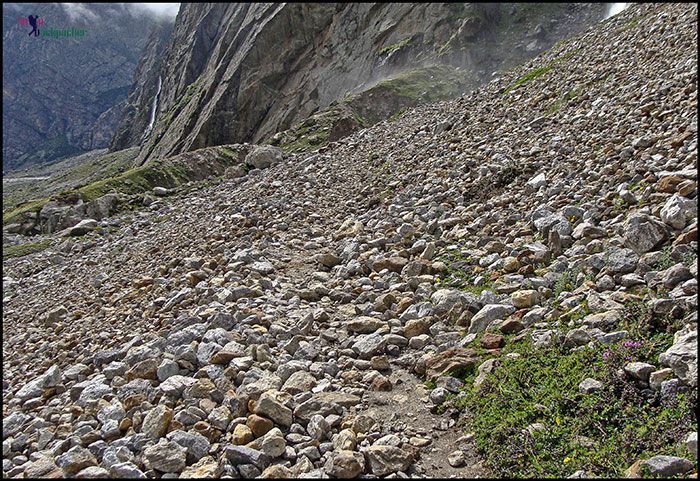
As we moved further ahead, we encountered several small streams of freezing cold water cutting across the trail. We had to remove our shoes and cross them carefully over the slippery rocks. One local man returning from Vasudhara Falls warned us that we should begin our return before 3 PM. As the snow melts during the daytime, the water level and current in these streams rise rapidly, making them much more difficult to cross later in the afternoon.
After nearly one and a half hours of trekking through the rugged mountain trail, we finally reached Vasudhara Falls.
केदारनाथ धाम की योजना कैसे बनाएँ: केदारनाथ धाम की यात्रा
5.2 Vasudhara Falls
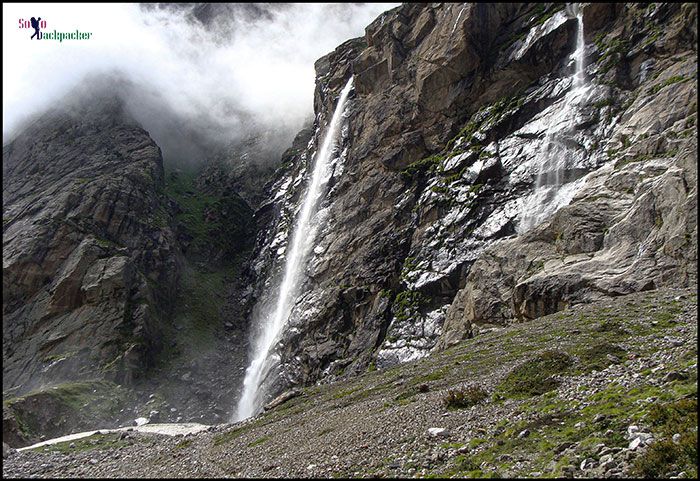
At first, we could hear the waterfall but could not see it at all. Everything around us was covered in thick mist and clouds. The frozen ice near Vasudhara Falls almost looked like a small glacier. Only the loud sound of crashing water and the tiny cold droplets hitting our faces reminded us that the waterfall was somewhere hidden nearby.
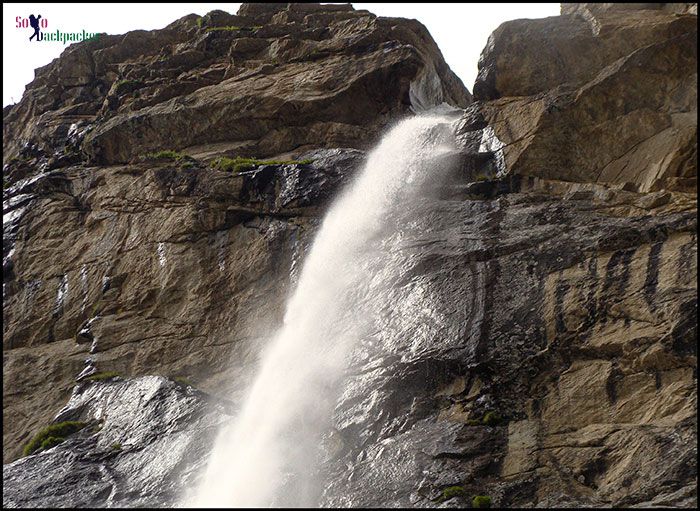
Then suddenly, for a brief moment, the fog cleared. And there it was. Vasudhara Falls appeared like a silver thread descending gracefully from the towering mountain cliffs. That single glimpse was enough. The entire exhaustion of the trek vanished instantly.
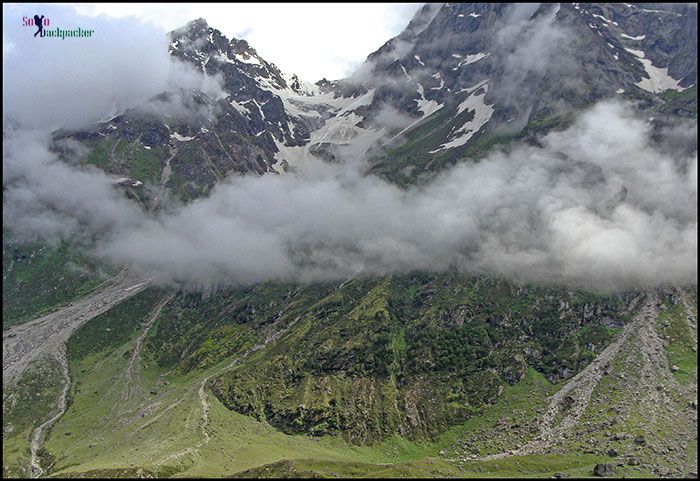
From Vasudhara Falls, the mighty Himalayan landscape opened up even further ahead. Balakun Peak stood prominently in front of us, while the Satopanth Glacier stretched towards the left. On the right lay the Bhagirath Kharak Glacier. The melting waters from these glaciers eventually come together to give birth to the sacred Alaknanda River.
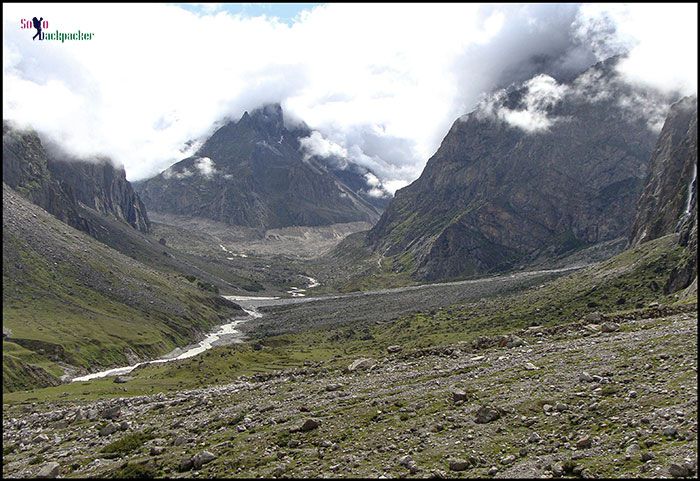
Standing there, surrounded by glaciers, clouds, waterfalls, and complete silence, one truly begins to understand why the Himalayas are considered sacred. The entire landscape around Vasudhara Falls felt raw, powerful, and deeply spiritual at the same time. We spent quite some time taking photographs and simply absorbing the surroundings before finally beginning our return journey. The weather had cleared by then. The mist was gone, but clouds still hung in the valley and around the peaks.
5.3 Return from Vasudhara Falls
As expected, the streams had become much stronger on our way back. We crossed the first two without much difficulty, but the third crossing demanded real effort. The water current had increased noticeably by then, making it difficult to keep balance on the slippery rocks. Still, we somehow managed to cross safely without any major trouble.
Before reaching Mana Village, Babaji told us that they had arranged food at a small makeshift camp near the trail. He warmly invited us to join them for a meal, but we politely declined and continued walking towards the village.
5.4 Swargarohini Base Camp Trek: The Route to Heaven
Nowadays, near Bhim Pul, a large entrance gate called Swargarohini Gate has been built. Beside the gate stand huge statues of the five Pandavas, Draupadi, and a dog, symbolising their final journey towards heaven. A beautiful temple has also been erected nearby.
Although Swargarohini Gate stands near Bhim Pul, the actual trekking route toward Satopanth and Swargarohini normally begins from the opposite side of the Alaknanda River. The starting point is closer to Mata Murti Temple, near the ITBP camp along the main road from Badrinath, before entering Mana Village. The Swargarohini base camp sits about 33 km from Mana and takes roughly 5-6 days of intense trekking to reach. The holy Satopanth Lake sits on this same route, about 25 km from Mana. The Vasudhara Falls trail is relatively manageable and suitable even for casual walkers. In contrast, the Swargarohini trail is extremely challenging and technically demanding. The terrain ahead involves crossing steep glacier moraines, rugged mountain sections, and dangerous open snowfields.
6. Return to Badrinath
After spending some more time wandering around Mana, we again walked all the way back to Badrinath by evening — tired, happy, and still excited like children. In the evening, we again had a darshan of Shri Badri Vishal. Many journeys stay in memory because of famous destinations. But some remain alive because of the small unexpected moments hidden in between.
Even today, whenever I think of Mana, I remember the empty road from Badrinath, the disappearing Neelkanth peak, the roar of the Saraswati River, and that magical first glimpse of Vasudhara emerging through the fog like a dream.
Long after the journey ended, it was these moments that stayed with me more than anything else. Beautiful mountains, rugged trail, roaring streams, kind strangers all of it became part of a memory far greater than a simple day trip from Badrinath. Perhaps that is the true magic of the travel.
📌 7. Quick Notes for Travellers
A few things worth knowing if you’re planning this yourself:
-
Mana Village is around 4 km from Badrinath and is perfectly walkable if you have enough time and energy.
-
The trek to Vasudhara Falls starts from Bhim Pul and is nearly 5 km one-way. Keep at least 3.5 to 4 hours in hand for the complete return journey.
-
Start the trek early and try to return to Bhim Pul before 3 PM. As daytime snow melts in the higher mountains, the streams crossing the trail become much stronger by afternoon.
-
Carry enough water and some light snacks. There are no proper shops along the trekking route.
-
Wear shoes you don’t mind getting wet — crossing icy mountain streams is part of the experience.
-
Mana Village remains accessible mainly during the Char Dham Yatra season (roughly May to November). During winter, the village becomes largely deserted due to heavy snowfall.
-
The altitude here is around 3,200 metres. Since the journey from Haridwar to Badrinath involves a gradual climb through the mountains, most travellers usually do not face serious acclimatisation issues. However, spending a day in Badrinath before attempting the trek can still be helpful.
📌 8. Trip to Mana Pass/Deo Taal
-
It is possible to travel from Mana Village towards Mana Pass, but the route is accessible only by personal vehicles.
-
A Special Permit (Inner Line Permit) from the SDM Office, Joshimath, along with permission from the Army/ITBP, is mandatory for visiting Mana Pass and Deo Taal.
-
The permit can be obtained online as well as offline.
-
Police Clearance/Character Certificate from the local police station of the residence is required to apply for the permit.
- Online permit is available at following link:
Online ILP Link: Inner Line Permit to visit Mana Pass
