

Contents
- Discovering Khaliya Top Trek by accident
- Where is Khaliya Top Trek located?
- Khaliya Top Trek Distance, Height and Difficulty
- Trekking Options: Day Hike vs Overnight Camping
- Khaliya Top Trek Cost and Entry Fees
- Starting The Trek: From Khaliya Dwar into the Forest
- Reaching Khaliya Base Camp
- Early Morning Ascent: Sunrise, Bugyals and Himalayan Magic
- Zero Point: 360-Degree Himalayan Views
- Crowd Levels: A Refreshingly Quiet Trek
- Descent, Breakfast and Continuing the Journey
- Best Time for Khaliya Top Trek
- Mobile connectivity at Khaliya Top Trek
- Why Khaliya Top Trek Deserves More Attention ?
Discovering Khaliya Top Trek by accident
While riding through the hushed mountain roads of eastern Uttarakhand, the Khaliya Top Trek was the last thing on my mind. This journey was meant to be nothing more than a motorcycle ride—unhurried, familiar, and comfortingly predictable. Uttarakhand, after all, has a way of revealing itself gently: ancient temples hidden in forest clearings, serpentine roads etched into fragile cliffs, drowsy hill towns basking in afternoon silence, and Himalayan horizons that stretch endlessly, dissolving into the sky. Trekking wasn’t part of the plan. At least, that’s what I believed then. But then, the Khaliya Top Trek happened without any specific reason.
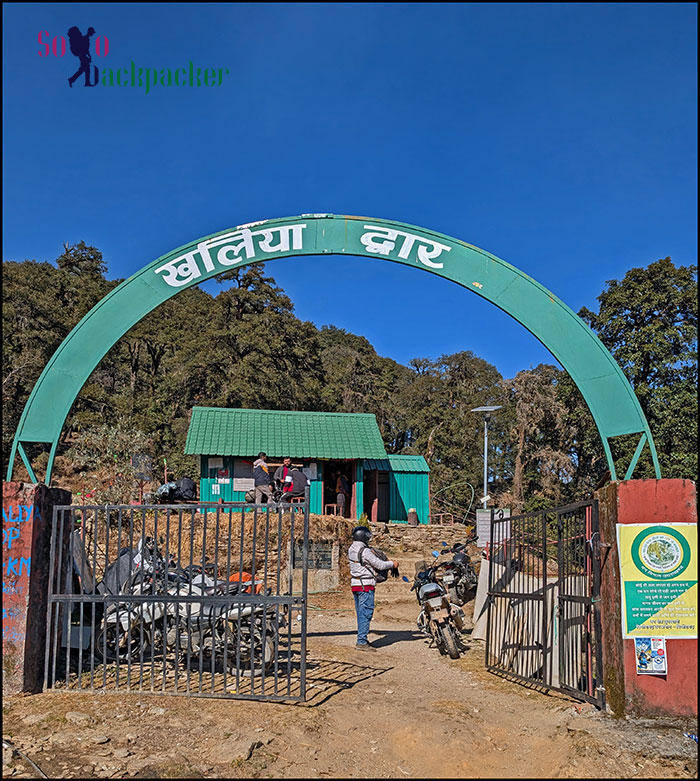
It was somewhere around eight kilometers before Munsiyari—a high-altitude, remote town in the Kumaon Himalayas—that fate intervened. A simple gate stood by the roadside, almost modest in its presence. It read Khaliya Dwar, the gateway to the Khaliya Top Trek. There were no crowds, no trekking groups unloading rucksacks, no dramatic signboards promising adventure. Just a quiet entry into the forest.
I assumed it would be a casual detour—a short one- or two-kilometer walk. But a brief inquiry revealed the truth: this was a six-kilometer trek, one way, climbing steadily toward a place known as Zero Point. From there, the reward was said to be extraordinary—a surreal 360-degree panorama of the Himalayan ranges. Giants like Panchachuli and Rajrambha dominated the skyline, rising with a quiet authority, like ancient sentinels guarding the land.
I paused for a moment, caught between comfort and curiosity. There was no grand motivation, no dramatic urge to conquer a summit—just a gentle pull, the kind the mountains exert without force. And so, almost instinctively, I decided to step off the road and onto the trail, unaware that this unplanned choice would soon turn into one of the most memorable chapters of the journey.
Where is Khaliya Top Trek located?
The Khaliya Top Trek is located near Munsiyari in the Pithoragarh district of Uttarakhand. Munsiyari is a small mountain town at an altitude of about 2,200 meters (7,200 feet) and is often called the gateway to high-altitude treks in the eastern Kumaon region.
The starting point of the trek, known as Khaliya Dwar, is right on the main road leading to Munsiyari, around 8 kilometers before the town. Because of its location, it is easy to reach by motorcycle, car, or shared taxi.
Unlike popular trekking hubs such as Kedarkantha or Triund, Khaliya Top remains largely off the mainstream tourist radar, which is exactly what makes it special.
Khaliya Top Trek Distance, Height and Difficulty
- Total Trek Distance: 6 km one-way (12 km round trip from Khaliya Dwar)
- Base Camp Distance: 3 km from Khaliya Dwar
- Base Camp Altitude: 3246 m (10,650 feet approx)
- Maximum Altitude (Zero Point): Approx. 4000 m (13,123 feet)
- Trek Difficulty: Easy to Moderate
- Ideal For: Beginners, solo travelers and photographers
The trail to Khaliya Top is clearly marked and easy to follow, which makes the trek comfortable even for those attempting a mountain hike for the first time. For most of the route, the path is stone-paved, offering a stable surface and reducing the risk of slipping, especially during early mornings or after light rain.
Occasional resting points along the way provide space to pause, catch one’s breath, and take in the surrounding forest views. Surrounding trees offer shade, keeping the trail cool and pleasant even during warmer months.
Trekking Options: Day Hike vs Overnight Camping
Local tour operators at Khaliya Dwar usually offer two trekking options:
Option 1: Same-Day Khaliya Top Trek
- Stay overnight in Munsiyari
- Start early morning
- Hike 6 km to Zero Point
- Descend back to Khaliya Dwar the same day
This option requires covering nearly 12 km in a single day, which can be physically demanding due to altitude and steep ascents.
Option 2: Overnight Stay at Base Camp (Recommended)
- Trek 3 km on Day 1 to Base Camp
- Stay overnight in tents
- Resume trek early morning on Day 2
- Hike remaining 3 km to Zero Point for sunrise
- Descend 6 km back to Khaliya Dwar
We chose the second option, and it turned out to be the best decision.
Khaliya Top Trek Cost and Entry Fees
Here’s a realistic breakdown of expenses:
- Forest Entry Fee: ₹50 per person
- Parking Charges for vehicles: ₹50 per bike and ₹100 per car
- Base Camp Tent Stay (2-person sharing): ₹1000 per person (negotiable)
- Negotiated Cost Paid: ₹1600 for two people
What’s Included in the Camping Package?
- Shared tent
- Sleeping mat
- Sleeping bag and blanket
- Camping light
- Dinner at base camp
- Breakfast in the next morning
Note 1: Although some signboards displayed prices as low as ₹600 per person, tour agents clarified that these rates apply only during the off-season.
Note 2: Hiring a guide requires an additional payment. Usual amount covers only basic lodging and meals at the base camp and does not include guide charges. However, since the trail is clearly marked and easy to follow, the trek can comfortably be completed without a guide.
Starting The Trek: From Khaliya Dwar into the Forest
After leaving our extra luggage safely at the Khaliya Dwar office and collecting the receipts, we walked past the gate and entered the forest. The change in atmosphere was instant and noticeable. The noise and rush of the outside world faded away, replaced by calm and quiet.
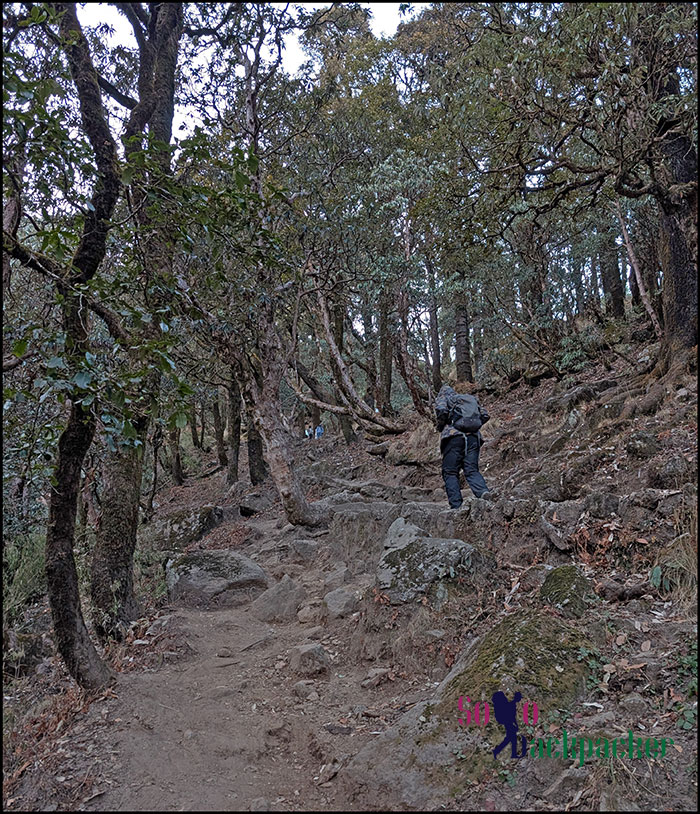
A clean and well-laid stone path guided us uphill through thick forest. Tall rhododendron, oak, pine, spruce, and cedar trees surrounded us on all sides. The air felt fresh and cool, filled with the smell of pine leaves and moist soil. With every step, the forest seemed more alive. Birds kept calling from different directions, and soft sunlight passed gently through the trees, creating a peaceful mood.
After hiking for about one kilometer, the trees opened up for a short moment. Through the gap, we saw our first clear view of the Panchachuli peaks. The mountains were glowing in warm orange light from the setting sun, standing tall and majestic against the sky. That short but powerful view changed everything for us. The tired legs, the heavy breathing, and the slow steps we had been taking suddenly did not matter anymore. It felt as if the sun-soaked mountains had quietly taken all our exhaustion away.
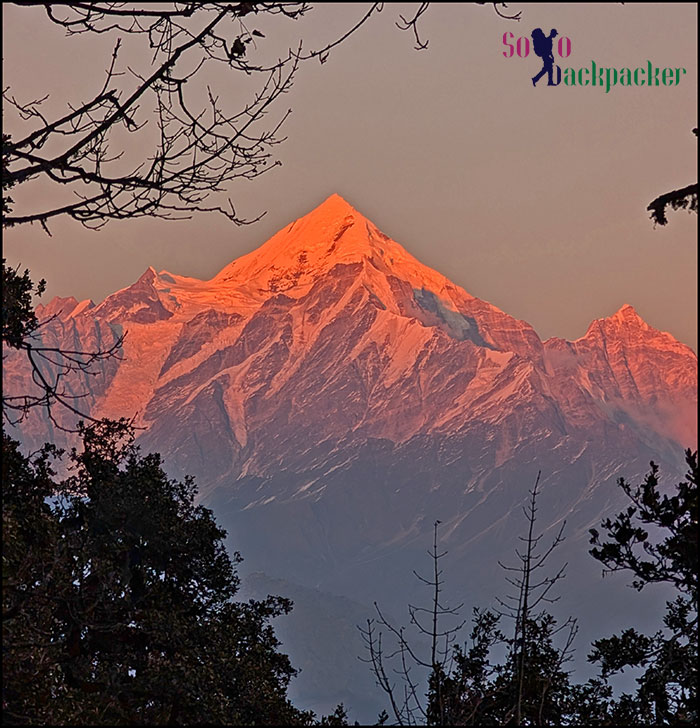
We stood there for a few moments without speaking, simply looking at the glowing peaks in front of us. The beautiful view reminded us that hard work is often rewarded with something truly special. That brief sight did not just refresh our bodies, it lifted our spirits. With lighter hearts and renewed confidence, we continued the climb, feeling more connected to the mountains and to ourselves.
If you are interested in a trekking destination in North East India: Dzukou Valley Trek in Nagaland
Reaching Khaliya Base Camp
As the daylight slowly faded, the forest became dark much faster than we expected. The shadows grew deeper with every step. By the time we finally reached Khaliya Base Camp, the mountains were completely covered in night. The sky was dark, and the surroundings felt quiet and still.
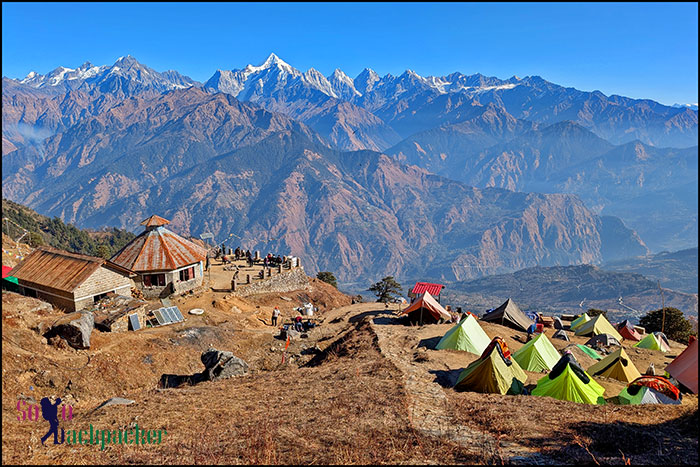
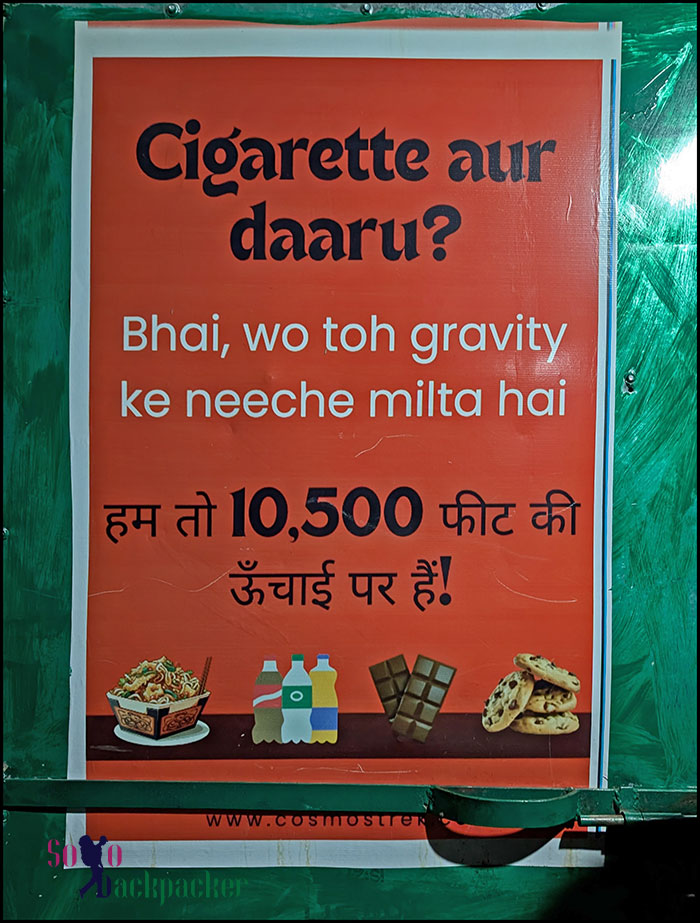
The base camp was very simple, but it felt warm and comforting after the long walk. A few tents were set up in an open space, surrounded by silence and cold mountain air. There were no bright lights, no noise, just a calm and peaceful atmosphere. Nearby, there was a small shop selling simple snacks like chocolates, biscuits, and chips, all priced at twice their usual cost. Still, at that altitude, even these small things felt comforting and special.
After settling in, we were served dinner. The food was hot, filling, and exactly what our tired bodies needed. Every bite felt satisfying after the day’s long effort of riding and hiking. Later, we slipped into our sleeping bags inside the tent. As the wind gently brushed against the tent, a sense of peace settled over us. The tiredness of the day caught up quickly, and we fell asleep easily, feeling safe, calm, and content in the heart of the mountains.
Early Morning Ascent: Sunrise, Bugyals and Himalayan Magic
We woke up before sunrise to sharp cold air and a sky filled with stars. Like many other trekking places demanding short hikes, it was similar noisy night. A group of young people arrived late in the night and made a lot of noise for some time. Still, it was not as disturbing as I have experienced at many over-crowded campsites. Despite the noise, I managed to get a good and restful sleep.
As morning approached, we packed our day-packs with light snacks and got ready for the day. With the first signs of dawn, we began the next part of our journey. Our plan was to hike to Zero Point, which was about three kilometers away.
The trail became steep almost right away. Stone steps went straight up, making the climb slow and tiring. Our legs felt heavy, and breathing became harder with each step. Even so, we kept moving forward, one step at a time. After walking for about a kilometer, the trees slowly disappeared, and the forest suddenly opened into a wide open bugyal (an alpine meadow) offering breathtaking views.
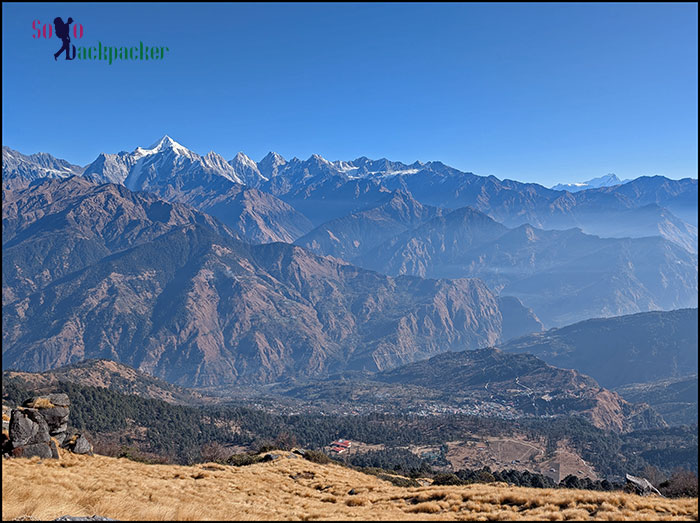
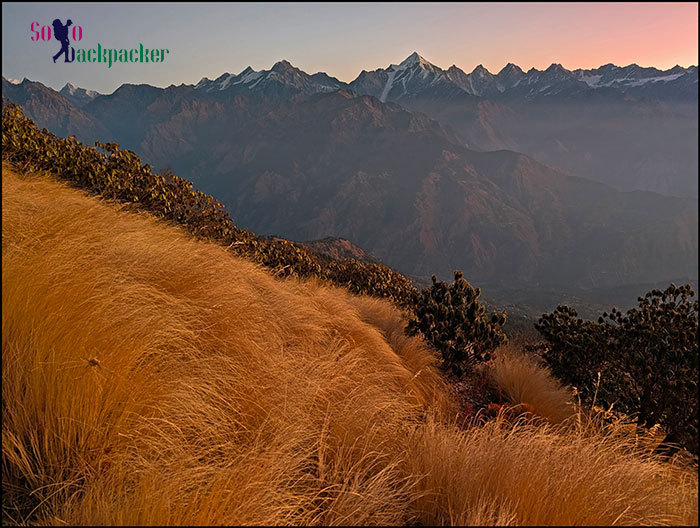
Standing there, breathless, I felt an overwhelming sense of stillness. The bugyal stretched endlessly, bathed in soft golden light as the sun rose behind the mountains.
A Rare Wildlife Encounter: Himalayan Monal
Just when the moment felt complete, a sudden movement caught my eye. A Himalayan Monal—the state bird of Uttarakhand—was grazing calmly in the meadow. Then another. And another. It was an entire family.
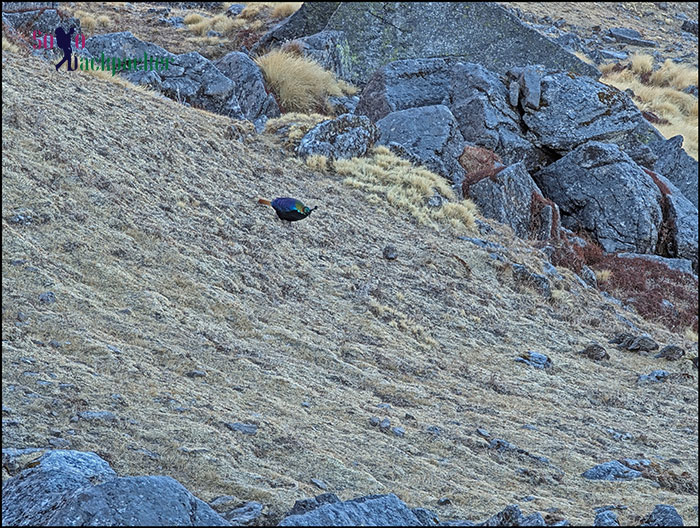
Even after exploring Uttarakhand for almost twenty years, I had never seen a Monal in the wild—until now. Standing quietly in the meadow, I watched the birds move gracefully. The feathers shone with soft colors in the morning light, a subtle glow that seemed almost unreal. I wanted to take some photos, but the Monal family was too far away. I really missed having a zoom lens at that moment—it could have been picture-perfect. Still, I managed to capture a few memories with my mobile camera.
Zero Point: 360-Degree Himalayan Views
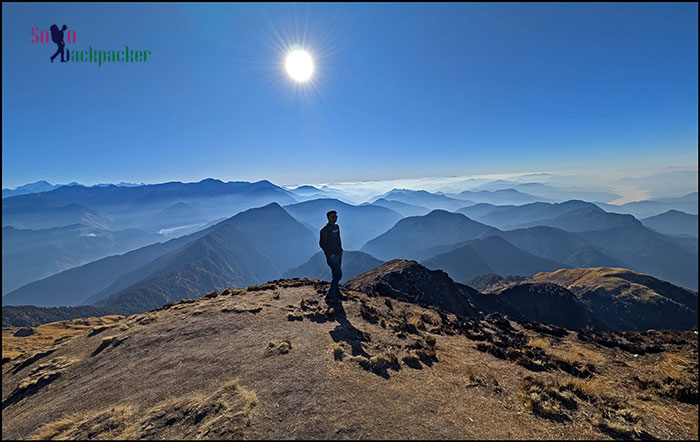
From the bugyal, the final climb to Zero Point felt both challenging and thrilling. The bugyal already offered a breathtaking view of at least 180 degrees of the surrounding peaks. I couldn’t see much reason to hike further, but my friend encouraged me on. Ahead, a bend in the trail came into view, and I decided to reach at least that corner, hoping to glimpse another side of the mountain. After some effort, I made it. From there, a short but steep climb led to Zero Point. We pushed ourselves a little more and finally reached the top—there was nowhere left to go.
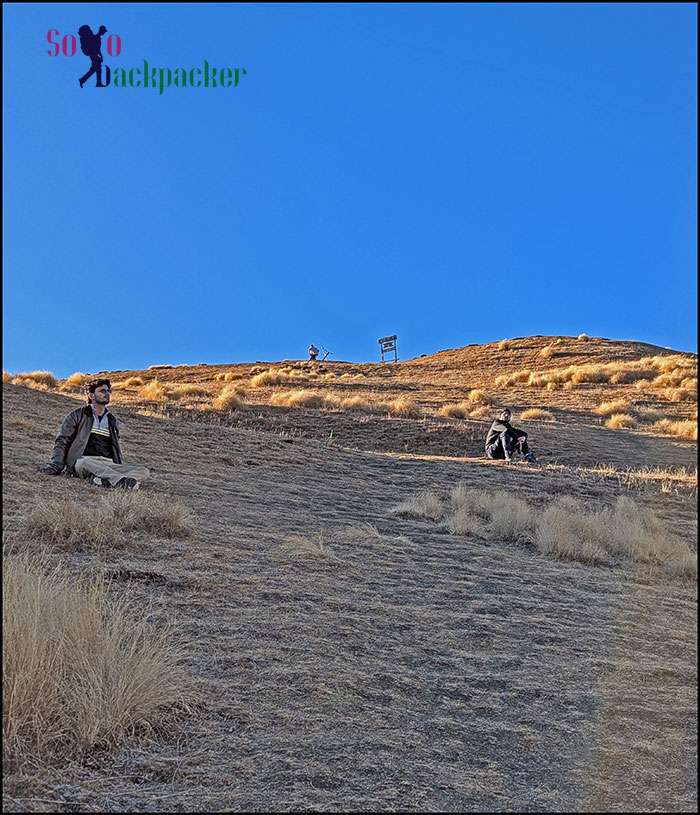
At Zero Point, the view stretched out in every direction. Snow-covered Himalayan peaks rose all around—Panchachuli, Rajrambha, Nanda Devi, Nagling, Bainti, Telkot and other ridges and valleys as far as the eye could see. Tiny villages lay far below, barely visible. The whole scene felt unreal, as if the world had opened up just for us. Every direction offered something new to marvel at, and the sheer vastness made me pause in awe. Standing there, I felt both small and connected to everything around me. It was a 360-degree panorama that no words or pictures could ever fully capture.
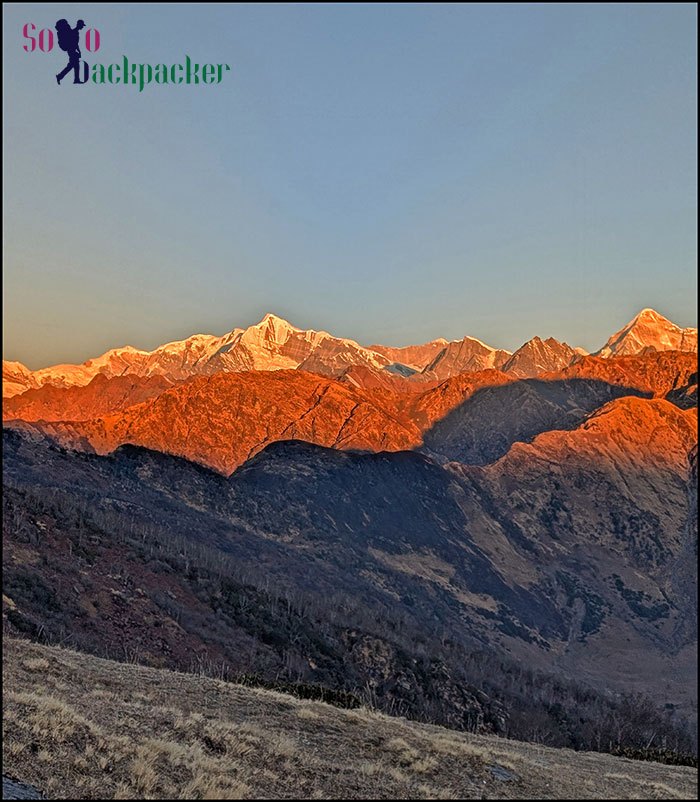
We spent almost an hour at the top, taking photos and simply enjoying the view, letting the mountains leave their mark on our memories. Unlike the strong winds we had felt on the Kedarkantha Trek, the breeze here was gentle, making it easy to relax and take in the surroundings. We could truly enjoy the summit, feeling calm and connected to nature all around us. Every moment felt extraordinary, as if we were in a place beyond the ordinary world. For me, it was an unforgettable experience, one that I would carry in my mind forever.
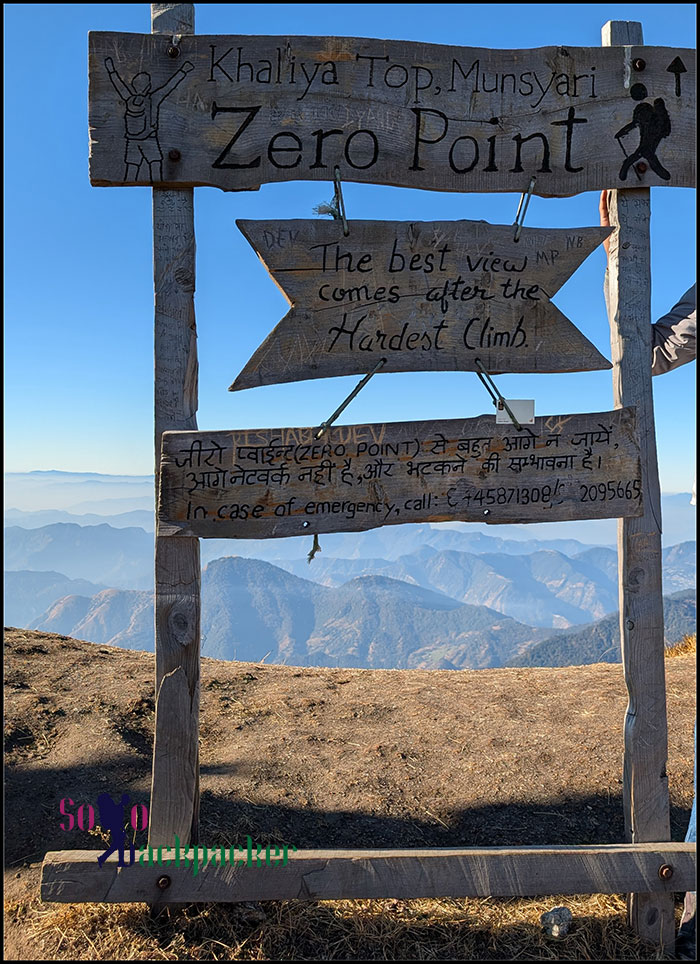
Note: Even if one chooses not to hike all the way to Zero Point, the view of Panchachuli Peaks from the bugyal or base camp, or even from Munsiyari town itself are deeply rewarding.
Crowd Levels: A Refreshingly Quiet Trek
One of the most memorable things about the Khaliya Top Trek is its quietness. Unlike popular treks like Kedarkantha or Chopta-Tungnath, where the trails are crowded and bustling, Khaliya Top remains calm and nearly empty. This peacefulness makes the journey feel more personal. Without the noise and rush of others, you can pause, breathe, and truly absorb the surroundings. The solitude allows space for reflection, a deeper connection with nature, and a sense of being part of the mountains themselves. Every step and every view here feels intimate, serene, and truly unforgettable.
Another Trekking Experience:Trekking to Kedarnath Temple in Uttarakhand
Descent, Breakfast and Continuing the Journey
After spending some time soaking in the breathtaking views, we slowly made our way back to the base camp. A warm breakfast was waiting for us, and it felt perfect after the long climb. We enjoyed our meal, feeling satisfied and relaxed, and then took care of the remaining payment for the trek. After packing our daypacks, we prepared for the final descent toward Khaliya Dwar.
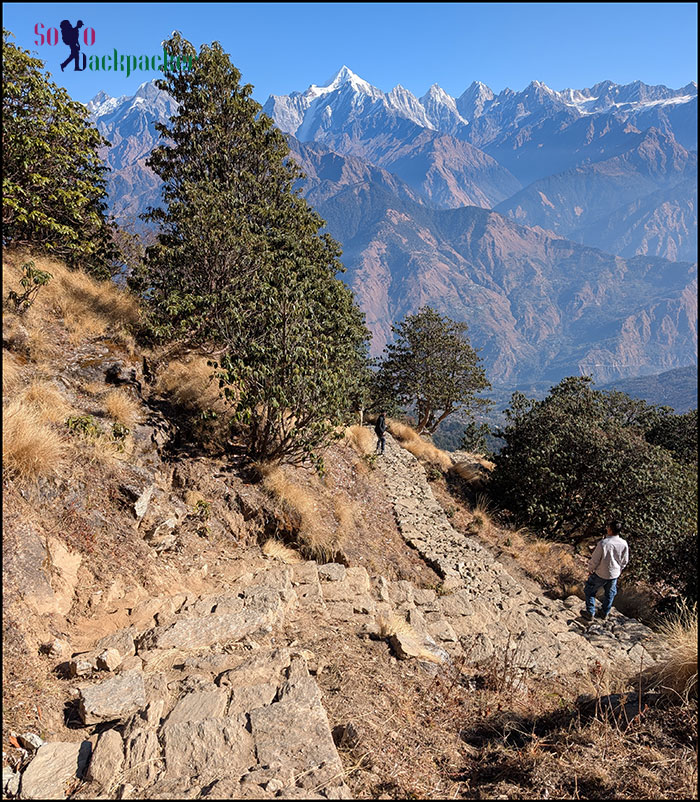
The winding path down below, surrounded by tall trees and distant peaks, seemed almost magical. What had started as an unplanned stop on our journey had unexpectedly become one of the most memorable experiences of my trip. It reminded me how sometimes the best moments happen when we are not following a strict plan.
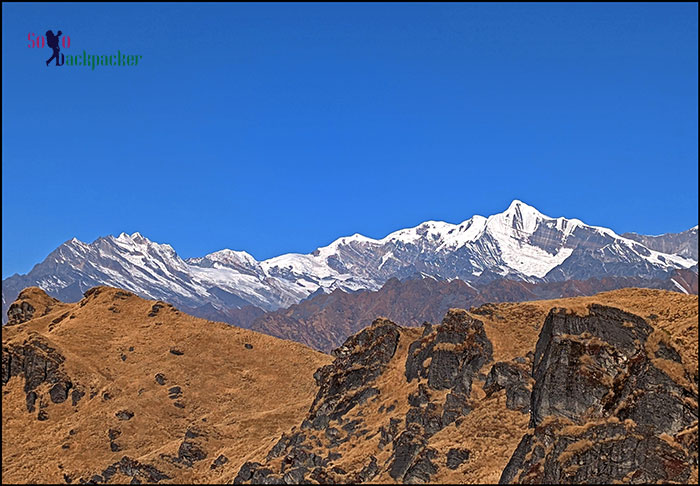
As I rode my bike onward toward Munsiyari, I kept thinking about that quiet mountain trail. I realized that the Himalayas often reward those who are open to surprises. The unplanned stops, the quiet trails, and the peaceful moments away from crowds often leave the deepest impressions. Some of the best Himalayan experiences are the ones you never plan, and this one was exactly that.
Best Time for Khaliya Top Trek
- Spring (March–April): Rhododendron blooms, pleasant weather
- Summer (May–June): Clear skies, ideal trekking conditions. Beware of the rains and landslides on the mountainous roads in Uttarakhand.
- Autumn (September–October): Crisp air, excellent mountain views
- Winter: Snow-covered trail (requires experience and local guidance), However we didn’t encounter any snow in the end of December.
Mobile connectivity at Khaliya Top Trek
Jio and BSNL provide fairly reliable connectivity along the Khaliya Top Trek. Jio mostly operates on an LTE network, though the signal can be intermittent at certain stretches. Even so, the available connectivity is generally sufficient for basic needs like social media usage and occasional video calls.
Why Khaliya Top Trek Deserves More Attention ?
The Khaliya Top Trek is one of the hidden gems of the Himalayas that deserves far more recognition. Unlike popular treks, the trail at Khaliya Top remains quiet and peaceful, offering a rare chance to enjoy the mountains without crowds. The journey itself is full of charm—through serene forests, open bugyals, and winding trails that reveal glimpses of snow-covered peaks, deep valleys, and distant villages along the way.
Whether you are a motorcyclist, a beginner trekker, a photographer, or a seeker of quiet beauty, Khaliya Top offers an experience that stays with you long after the trail ends. Khaliya Top is not just a trek; it is an experience of solitude, reflection, and wonder. For those seeking a personal Himalayan adventure away from the noise and rush of popular trails, this trek offers everything—a sense of peace, stunning views, and memories that linger long after the journey ends. It truly deserves more attention from travelers and nature lovers alike.

It’s really Helpful, summed up very clearly and to the point
So beautifully explained, sir. Looking forward to be there soon. Thankyou so much for documenting.