

📍 Contents
1. The Gateway of the Garhwal Himalayas
1.1 Introducing Jyotirmath (Joshimath)
Jyotirmath, still popularly known as Joshimath, serves as the gateway to many destinations across the eastern Garhwal Himalaya.Once a peaceful hamlet and a stopover for pilgrims travelling to Badrinath and Hemkund Sahib, the town has grown rapidly over the years and now offers many modern amenities, including hotels, guesthouses, modern shops, and even a cinema. The rapid growth went beyond what the fragile Himalayan ecosystem could sustain, and Joshimath eventually became a victim of this unchecked development.
In recent years, the town made national headlines after several reports of cracks appearing in the land, roads, and houses. Today, the sinking town stands on the verge of collapse. Until then, the town continues to serve thousands of pilgrims and trekkers visiting the region in large numbers.
1.2 Winter migration from Badrinath Valley
Despite its challenges, the geographical setting and natural beauty of the place remain truly captivating. The main shrine of Badrinath remains covered in snow for nearly six months during winter. As the season turns harsh, many residents of the Badrinath valley move down to places like Pandukeshwar, Vishnuprayag, and Jyotirmath to spend the winter months. The sacred idol of Lord Badrinarayan (Lord Vishnu) is also brought down from the main Badrinath Temple to the ancient Narsingh Temple in Joshimath through a grand ceremonial procession led by the priests.

The Rawal, the head priest of the temple, is traditionally a Nambudiri Brahmin from Kerala. This 1,200-year-old tradition, believed to have been established by Adi Shankaracharya, requires the Rawal to remain a bachelor and perform the daily rituals according to Tantra-Vidhi traditions. With the arrival of summer and the beginning of the Char Dham Yatra in Devbhoomi Uttarakhand, the idol is again taken back and reinstalled in the main temple at Badrinath amid grand celebrations.
A Spiritual Guide to Badrinath Temple: Badrinath Temple: The Spiritual Heart of the Char Dham
2. Places to visit in Joshimath
2.1 Shankaracharya Math
Adi Shankaracharya is believed to have spent five years of his life here and established the first Jyotirpeeth (monastery/math), which over time is corrupted into the name Joshimath. The Math is located on an uphill road near the GMVN hotel. A narrow lane branches off from the side of the hotel, leading you directly toward the Math.

In fact, Adi Shankaracharya is believed to have established four major mathas in the four corners of India, with the others located at Sringeri, Puri, and Dwarka. The heads of these institutions are titled “Shankaracharya.” According to this tradition, each math is associated with one of the Vedas, and this math is said to be linked with The Atharva Veda.
Interestingly, despite its proximity to the revered shrine of Badrinath, Jyotirmath (Joshimath) has not functioned as an active matha on a regular basis. Many also believe that the original northern matha was actually established at Badrinath itself.
2.2 Kalpavriksha
More than 2,500 years old (as per belief), the Kalpavriksha tree is considered one of the oldest trees in India. It is believed that when Adi Shankaracharya arrived in Joshimath, he used to meditate in the shade of this sacred tree.

The cave where he is said to have spent his time is also located nearby.The Kalpavriksha is basically a Mulberry (Shahtoot) tree with a circumference of about 21.5 metres. Today, it is believed to bear only flowers and no fruit, although its leaves remain green and fresh. Every year, millions of pilgrims travelling to Badrinath pass by this tree, often unaware that it is believed to be as ancient as the Badrinath Temple itself.

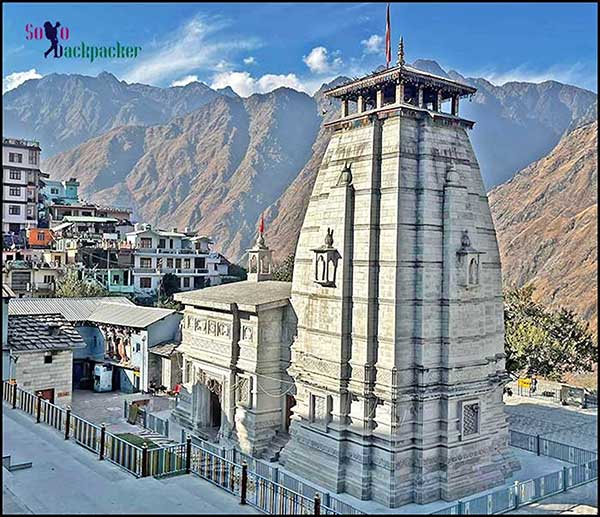
2.3 Narsingh Devta Temple (Narsimha Temple)
This was a 1,200-year-old temple until it was recently replaced by a newly constructed grand structure. The idol has also been consecrated in the new temple, but the place of the AdiGuru’s throne remains unchanged. Some parts of the old temple have also been preserved. I feel fortunate to have witnessed the colourful glory of that old Narsimha temple in Joshimath.

The presiding deity of the temple is Lord Narasimha, the half-man, half-lion and fourth incarnation of Lord Vishnu. It is in Joshimath that one can witness the gentle manifestation of Lord Narasimha. It is believed that after he killed Hiranyakashipu, he remained in a fierce state, and the world grew fearful of his rage. Only his devotee, Prahlad, could approach him and pray for his anger to subside. Moved by his prayers, Lord Narasimha is said to have calmed down here in Joshimath. The fourth incarnation of Lord Vishnu, the protector of devotees, is worshipped here in his peaceful form.
The idol is depicted seated on a lotus and is made of Shaligram stone. It is believed that the left arm of Lord Narasimha is gradually eroding from the palm side. According to the legends, the day the entire arm erodes, the Nara-Narayana mountains will collapse and merge together, eventually blocking access to the Badrinath shrine. It is also believed that “Bhavishya Badri,” located about 22–23 kilometres away, will then become the new shrine, where the image of Lord Vishnu is said to be continuously taking shape on a rock.
The Narasimha Temple opens at 5:00 AM and closes at 8:30 PM. The idol is bathed daily between 7:30 AM and 8:30 AM. This is considered the best time to view the Lord’s miraculous arm.
Apart from these attractions in Joshimath, the town serves as a gateway to several Himalayan destinations in the eastern Garhwal region, including Badrinath, Hemkund Sahib, Mana, and Auli. It also provides access to popular treks such as the Valley of Flowers Trek, Satopanth Glacier Trek, and Kuari Pass Trek.
Ready to Explore Eastern Garhwal? How to Plan a Trip to Eastern Garhwal: Badrinath, Valley of Flowers & Beyond
3. How to Reach Joshimath
The availability of transport options is limited and mainly depends on the Yatra season. During the Char Dham Yatra, there are many transport options available, while in the off-season, early morning departures are preferable to avoid missing transport options. Joshimath is accessible from two main routes within Uttarakhand:
3.1 Main route to Joshimath: via Haridwar / Rishikesh
On this route, the journey to Joshimath can be divided into two parts: first, by train or flight to Haridwar or Rishikesh, and then a bus or jeep journey onwards to Joshimath.
A. Air/Rail Connectivity
Haridwar (Station Code: HW) is well connected to the rest of India by a good number of trains, with some services extending up to Rishikesh. The nearest airport is Jolly Grant Airport in Dehradun (IATA: DED), located about 38 km from Haridwar and 20 km from Rishikesh. So, arriving by flight also means continuing the journey via Haridwar or Rishikesh.
More Stories from Rishikesh: A Morning Stroll Along The Ganges in Rishikesh
Frequent public buses are also available from Delhi’s Maharana Pratap ISBT at regular intervals throughout the day and night. Some buses also operate from Anand Vihar ISBT in Delhi. These buses take about 4–5 hours to reach Haridwar from Delhi. They usually make a short stop near Khatauli town, where travellers can get refreshments or meals. The bus stand in Haridwar is located close to the railway station. Rishikesh is about 25 km away from Haridwar, and the road journey usually takes around one hour.
B. Road Transport options
Only road transport is available for the onward journey to Joshimath from Haridwar or Rishikesh. The bus journey typically takes around 12 hours to complete. Majority of travellers prefer this route due to its proximity to New Delhi. The journey is especially scenic as it runs alongside the Alaknanda (Ganga) River and passes through towns such as Srinagar, Rudraprayag, and Karnaprayag.
i). Buses operated by Uttarakhand State Transport (Government Roadways)
Depending on the season, there are a few direct buses from Rishikesh to Jyotirmath (Joshimath) in the morning. During the Char Dham Yatra season (usually mid-May to mid-September), around 3–4 buses depart from Rishikesh early in the morning, around 5:00 AM, for Joshimath. They typically reach in the evening after a journey of about 12 hours. The fare is around ₹800 per person. Online booking is not available on this route.
In the off-season, there is usually only one bus, which also departs early in the morning around 5:00 AM and reaches Joshimath by evening.
ii). Buses operated by Garhwal Motor Owners Union (GMOU) Ltd Services
GMOU regularly operates 3–4 buses from Haridwar and Rishikesh to Jyotirmath (Joshimath) and Badrinath. The first bus from Haridwar departs at 4:00 AM, followed by another at 4:30 AM; both continue up to Badrinath. There is also a bus at 6:00 AM that operates only up to Joshimath. A few additional buses may also depart from Rishikesh in the early morning hours.
These buses typically take around 12 hours for the journey. The fare is approximately ₹800 per person up to Joshimath and ₹1000 up to Badrinath. Tickets can be booked online through the official GMOU website from Haridwar to Badrinath, but not available for other combinations (except Sonprayag i.e. Kedarnath Dham Yatra). For the best experience, it is recommended to choose a right-side window seat to enjoy uninterrupted views of the river valleys along the route.
iii). Buses operated by Tehri Garhwal Motor Owners Corporation (TGMOC) Ltd
TGMOC also operates 3–4 daily buses from Haridwar to Jyotirmath (Joshimath) and Badrinath via Rishikesh, especially during the Char Dham Yatra season. The first bus departs from Haridwar at 3:15 AM, reaching Joshimath at around 2:00 PM and Badrinath by 5:00 PM. The last bus leaves Haridwar at 7:45 AM and terminates at Joshimath, arriving there at around 6:00 PM. The fare is approximately ₹1000 to Joshimath and ₹1200 to Badrinath. These tickets can be booked online through the official TGMOC website or other booking platforms.
iv). Other Private Buses and Shared Jeep Services from Haridwar/Rishikesh to Joshimath
Apart from these, several private buses and jeep operators also provide services on this route. Most buses depart early in the morning and reach Joshimath by late afternoon or evening. In Haridwar, these services are available near the railway station, where the government bus stand and GMOU bus stand are located close to each other. The best time to find them is quite early in the morning (4:00 AM to 6:00 AM).
In Rishikesh, private buses are available from the bus stand near the ISBT. Shared jeeps (Sumo/Maxx) are primarily available from Natraj Chowk, which is also located near Rishikesh ISBT. The best time to find them is early morning (5:00 AM to 7:00 AM) to secure a seat, with tickets typically costing around ₹ 900 per person.
C. Bus journey from Haridwar to Joshimath/Badrinath
The bus journey from Haridwar to Jyotirmath (Joshimath) offers breathtaking views of the Shivalik Himalayas and the Bhagirathi Valley. The buses usually make their first stop at Devprayag for breakfast, about 70 km from Rishikesh. The Alaknanda River originates from the Satopanth and Bhagirath Kharak glaciers near Badrinath, while the Bhagirathi River originates from Gaumukh near the Gangotri glacier and the Khatling glaciers. These two rivers eventually meet at Devprayag to form the Ganga (Ganges) River. Devprayag is one of the five sacred prayags (river confluences) in the Himalayas and an important pilgrimage site for Hindus.

Srinagar, situated on the banks of the Alaknanda River, is another important town on this route. The town was once the capital of Garhwal before the arrival of British rule. It is one of the largest towns in the Garhwal Himalayan region.
Moving further, you reach the town of Rudraprayag, another sacred prayag situated at the confluence of the Mandakini and Alaknanda rivers. The next prayag along the route is Karnaprayag, where the Alaknanda meets the Pindar River. Karnaprayag is widely believed to be the place where Karna from the Mahabharata worshipped the Sun God.
Two more of the sacred prayags also lie along this route: Nandaprayag, located on the way from Karnaprayag to Jyotirmath (Joshimath), and Vishnuprayag, situated on the route from Joshimath to Badrinath.
3.2 Alternate Route to Joshimath: via Haldwani/Kathgodam
Another alternate route is available from Bareilly, Haldwani, and Kathgodam, passing through scenic towns such as Almora, Kausani, Baijnath, and Gwaldam. This route is very scenic, with stretches through dense pine forests, but it is less preferred by most travellers. It eventually merges with the main route at Karnaprayag.

Haldwani (Station Code: HDW) and Kathgodam (Station Code: KGM) are well connected by rail. The nearest airports are Bareilly and Pantnagar, though they are not major hubs in India’s aviation network. From Haldwani or Kathgodam—preferably Haldwani—you need to continue the journey by changing buses or shared jeeps two to three times to reach Karnaprayag (for example: Haldwani → Garud/Gwaldam → Tharali intersection → Karnaprayag). This journey takes around 10 hours.
From Karnaprayag, Joshimath is about 84 km away and can be reached by shared jeep or public bus. Direct buses between Haldwani and Karnaprayag are usually not available, though there may be one government bus from Haldwani to Karnaprayag around 6:30 AM. Another bus (basically starting from Delhi ISBT) from Haldwani to Lohajung may also be available in the early morning and you can get down at Tharali intersection, about 45 km before Karnaprayag. In any case, you should be prepared to change 3–4 buses or jeeps to reach Joshimath via this route.

If you are travelling from any other part of the country, except the adjoining areas of Uttar Pradesh near Haldwani, it is better to take the first route. Although road-widening work is in progress on both routes, the Haldwani–Karnaprayag route has lost much of its charm due to the cutting of hundreds of pine trees.
4. The Gate System in the mountains
While moving around the Narsimha Temple in the Lower Bazaar area of Jyotirmath (Joshimath), we noticed a long queue of vehicles along the road. It was then that we understood the gate system in operation on this stretch. Due to the narrow roads in this difficult terrain, traffic is regulated through timed check-posts (gates). At a given time, one side of traffic is stopped at the check-post while the other side is allowed to pass, as directed by local authorities, and this process continues alternately for both directions.
Around 5:30 PM, the roads beyond Joshimath are closed to all vehicular movement except local cabs, which are allowed to operate until 8:00 PM. After this, a complete vehicular halt is enforced, and movement resumes only after 5:00 AM the next morning. This means that if you arrive in Joshimath after 5:30 PM by private vehicle, taxi, or bus, you will not be able to proceed further until the gates reopen at 5:30 AM.
The gate opening timings from the Joshimath side are 5:30 AM, 7:30 AM, 9:30 AM, 11:30 AM, 1:30 PM, 3:30 PM, and 5:30 PM. However, this system is generally enforced during the peak travel season; in the off-season, when visitor numbers are low, it is often suspended.
5. Where to Stay in Joshimath
The town has a wide range of small, budget-friendly hotels and local guesthouses. The Garhwal Mandal Vikas Nigam (GMVN) also operates a prominent property here. Known for its prime location and essential amenities, it can be conveniently booked online in advance.
However, if you are planning a visit during the monsoon season, there are a few practical aspects to keep in mind. The heavy Himalayan rains often bring persistent dampness to the region. In many older or budget accommodations, this can result in moist walls and a lingering chill indoors. While this humidity is a natural part of the mountain monsoon, it can feel uncomfortable for some travellers.
6. The Other Side of Joshimath: A Fragile Crossroads
Jyotirmath (Joshimath) stands at a fragile crossroads today. While local legends speak of the gradual erosion of the arm of Lord Narasimha as a traditional symbolic belief, the present concerns are rooted in very real environmental pressures. The Alaknanda River basin, stretching from Niti Valley to Devprayag, has seen extensive hydroelectric development, with numerous projects either operational, under construction, or under review.

Excavation and blasting for power projects have caused several of the region’s natural and traditional water sources to dry up. Cracks in homes, hotels, government buildings, and other structures in Joshimath and nearby villages are becoming wider and deeper. In the last two years, the rate of cracking may have slowed, but the risk continues due to blasting associated with tunnel construction for hydroelectric projects, which began in the 1980s and whose impacts are still being felt today.
It is a well-known fact that Joshimath is located in a landslide-prone zone. Despite this, the stability of the town and its surroundings has increasingly come to depend on man-made tunnels and infrastructure. Cracks and uneven ground now appear across many parts of the town, almost like wrinkles on its surface.
The local population is both aware of the impending danger and directly affected by it. Many families are gradually relocating from their homes, a process that is often deeply painful, as it means leaving behind places filled with memory and belonging. As a result, the indigenous population in this sensitive border region near China is steadily declining, making it an issue of serious concern.
In time, people will gradually adapt to the new name Jyotirmath. The real concern lies in preserving the essence of Jyotirmath itself. Otherwise, whether the town is called Joshimath or Jyotirmath will make little difference to future generations.

Sir
I am planning to visit Nainital, Almora, Ranikhet, Kausani in 1st/2nd week of october 2020.
Hi,
I was like to visit VoF, badrinath, hemkund sahab n suli this mid July, but apprehensive abt clouds n rain. Is it the right time to travel. Also, tell me at r the demerits of traveling with tour operators.
I liked ur blog, kindly guide.
Hi, July is the perfect time to visit the area. Lot of greeneries all around. But this month is prone to the landslides due to the rains. Choice is actually yours. We did travel to many places in Uttarakhand in the month of July without any problem. I love to travel individually without any tour operator. There is no demerit, if you travel with a tour operator. It’s only about our travel style and preferences. 🙂
Excellent blog. I stumbled upon your blogs yesterday only, searching details about Tabo, Key and surrounding areas of Spiti, yet I have skimmed through most of your blogs. You are a true blue traveller, travelling the way one ought to travel, and incidentally also the way I prefer to travel. If you do not take offence, I am presuming you will not, I would point at a factual error. Though Kalpvriksha (mulberry tree) you have described may be 2500 yrs old but Adi Shankar did not meditate here 2500 yrs ago as Adi Shankar lived during 9th century AD. I wish to interact more with u in future. Hats off for the wanderer bug you carry!
Fully Agree Sir. It was actually an error, when I made a wrong sentence. I am working on this post to make it more comprehensive. Thanks for pointing it out. 🙂
Can I reach from Haridwar to Badrinath in single day?
Yes. Start early in the morning. Preferably by the shared cabs/jeeps.
I am a retired Doordarshan Officer planning to is it chardham this year . Can you pls. Tell me when should I start and for how many days ? I would like to go alone . Is it o.k? Would mind to send me itinerary for this trip ? I wold like to see all the important places at one go.
I am rally very inspired reading your vivid description and planning to visit Devbhoomi .
GANESH C Mandal.
Hi Sir, You can start from Gangotri, then go to Yamunotri, from there, go to Badrinath and at last visit Kedarnath. Gangotri and Badrinath is very much approachable by vehicles, but treks are required to reach at Yamunotri and Kedarnath. 12-15 days are good to cover at comfortable place with additional sightseeing at nearby places, like Mana, Joshimath, Auli near Badrinath. Going alone is not a problem. Thousands of pilgrims are already there on these places.
MANMOHAN SINGH RAWAT, VIllage UFALDA, P.O. SRI NAGAR GARHWAL, DIST PAURI(LIVING IN DELHI Since 1977)
Your valuable comments about journey and the temples will help the people a lot. Hope people will know more about our Uttrakhand and they will enjoy uttrakhand. Tks a lot for your valuable information provided to us.
I am fm Uttrakhand living in Delhi since 1977. I studied in Delhi. I am fm Village – UFALDA, (Near Kirti nagar garhwal)P.O Srinagar garhwal, Distt.Pauri Garhwal now I am working in west Africa country – GHANA. I just see visiting the Devbhoomi and I am happy to see that our Uttrakhand has so many beautiful places one of them is AULI famous in the world. very nice to get the valuable information from you about Badrinath, Flowers valley DEVPRAYAG and other important which we could not know being a uttrakhandi.
Thank you Sir. I am glad that you liked it.
you are great @ writing , I am from the team of GMOU, nice to see your blogs and thanks for mentioning GMOU. would like to contact you. Please do write me @ sunil86.bisht@gmail.com
Thanks Sunil. I will write to you soon.
Hi , It is nice read this before going to the devbhoomi…
I have few doubts:
1) It is said that there are certain dates during which we can have darshan for these holy temples. Is it advisable to visit these places 10 days prior the dates?
2) You have managed to get Local Transport (GMOU), do they give us time to spend at Devprayag and Karnaprayag
3) What was your total expence visiting these places…. approx
Regards,
Pankaj Malhotra
Hi,
1) It is said that there are certain dates during which we can have darshan for these holy temples. Is it advisable to visit these places 10 days prior the dates?
No. These temples get open only on the specific date in summer for darshan and then get close on the specific date in the winter. You can go there beyond these dates also, but you may not enter in the temple. It gets closed.
2) You have managed to get Local Transport (GMOU), do they give us time to spend at Devprayag and Karnaprayag.
They only stop for some foods, water or personal needs. 20-30 minutes mostly.
3) What was your total expence visiting these places….
Uttarakhand is one of the best place to visit. I regularly go there in one or another part. It’s worth visiting and at some places, it’s a pure heaven.
I hope your doubts are clear now.
I am fm Uttrakhand
Nice description about jyothirmat. Your pictures are awesome. Keep writing more.GOD BLESS YOU.
Hi…..
it is nice to read your journey story,,, it also want to go there once again.
as i am a local boy from sri nagar garhwal.
It was really very helpful. Thanks for writing such a detailed description of your journey.
Thanks Akhil. 🙂 Hope you will also enjoy other articles on solobackpacker.
You have a beautiful blog.
Thanks Mam, Its my pleasure to have a visit from the blogger like you.